
When you pick up a generic pill from the pharmacy, you expect it to work just like the brand-name version. But what if it’s not real? Counterfeit generic medicines are a growing threat - and they’re harder to spot than ever. In 2023, the World Health Organization estimated that 10% of all medicines worldwide are fake, with generic drugs being the most targeted because they’re cheaper and less tightly controlled. These fakes can contain no active ingredient, the wrong dose, or even toxic substances like chalk, rat poison, or industrial dyes. The good news? You don’t need a lab to start checking. The packaging and labeling hold the first clues.
What to Look for on the Outside
Start with the box and blister pack. Authentic generics follow strict labeling rules, and even small mistakes can signal a fake. Look at the font size and spacing. Real manufacturers use consistent, high-resolution printing. Counterfeiters often use cheaper printers, leading to blurry text, uneven letter spacing, or slightly off colors. One pharmacist in Ohio caught a fake version of metformin because the "M" in the manufacturer’s logo was too wide - a detail no one else noticed until they compared it to a genuine pack. Check the expiration date. Fake medicines often have dates that are too far in the future or too close to the current date. Real companies print expiration dates in a specific format - usually month/year, centered and aligned with other text. If it’s crooked, smudged, or printed in a different font than the rest of the label, that’s a red flag. Look for holograms or color-shifting ink. Many brands use Optically Variable Ink (OVI) that changes color when tilted - green to blue, for example. Pfizer’s Viagra uses this, and many generic makers copy it. But counterfeiters often get it wrong. A real OVI shift is smooth and dramatic. A fake might look dull, or the color change might be too abrupt. Try holding the package under a light at different angles. If the effect looks painted on, it probably is.Covert Features: Tools You Can Carry
Beyond what your eyes can see, there are hidden security features. These aren’t meant for consumers - but pharmacists, nurses, and even curious patients can use simple tools to check them. UV lights are cheap and effective. Under a 365nm ultraviolet lamp (available for under $20 online), authentic packaging often reveals hidden text, logos, or patterns only visible in UV light. Johnson & Johnson’s Tylenol packs have this. If you see nothing, or if the hidden mark glows too brightly or unevenly, something’s off. Barcodes and 2D data matrices (like QR codes) should scan cleanly. The FDA’s Drug Supply Chain Security Act (DSCSA) requires every prescription drug package to have a unique serial number. Scan it with your phone. If the app says "invalid code," "not registered," or "product not found," walk away. But here’s the catch: many generic manufacturers still don’t use consistent serialization. A 2022 survey found that 40-50% of generic medicine barcodes fail verification apps because they’re missing, duplicated, or inconsistently formatted. So a failed scan doesn’t always mean fake - but it should raise your suspicion.Why Generic Drugs Are More Vulnerable
Branded drugs have big budgets for security. They spend millions on anti-counterfeiting tech - holograms, RFID tags, tamper-proof seals. Generic manufacturers? They operate on razor-thin margins. The average generic drug costs 80% less than its brand-name equivalent. That means less money for packaging security. According to the Generic Pharmaceutical Association, only 55% of U.S. generic manufacturers use advanced security features on all products. The rest rely on basic printing - making them easy targets. Also, generics pass through more hands. Branded drugs usually go from factory to distributor to pharmacy - three steps. Generics? Often five to seven. Each step is a chance for a fake to slip in. A batch might be diverted, repackaged, and resold in a different country. That’s why counterfeit generics are more common in places with weak supply chain controls - but they’re showing up everywhere, including in U.S. pharmacies.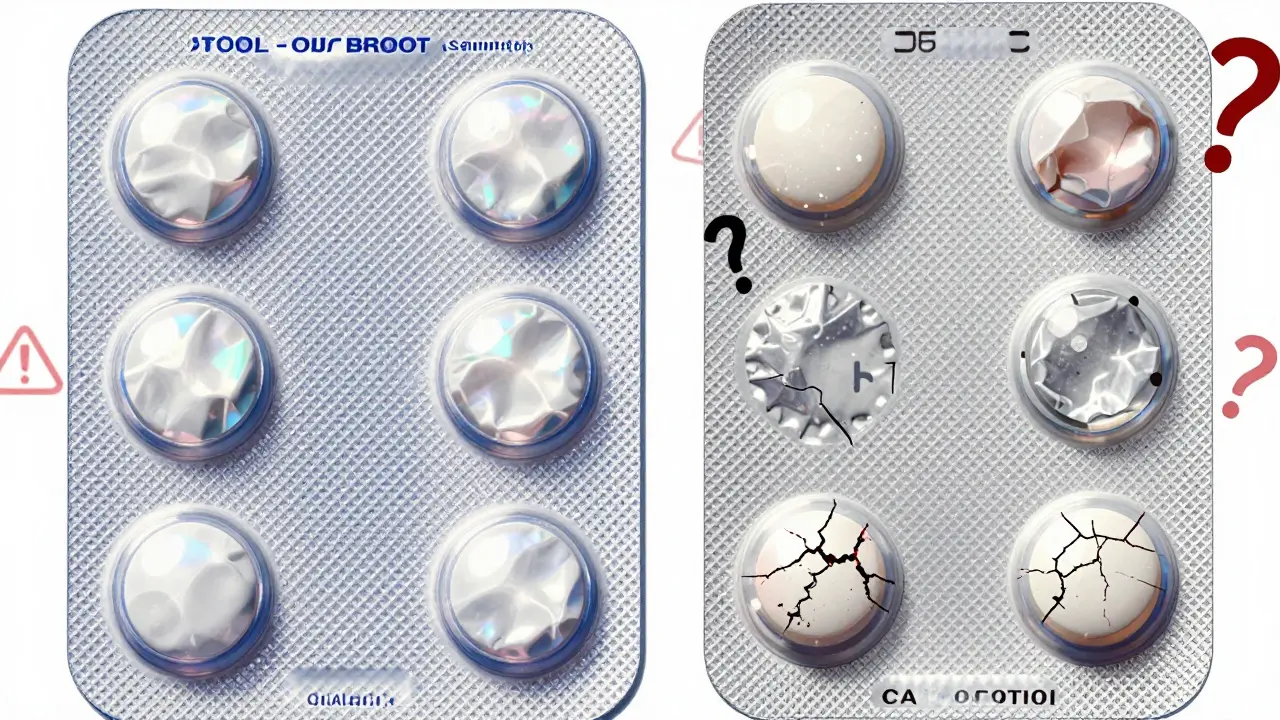
Advanced Verification: What Hospitals and Pharmacies Use
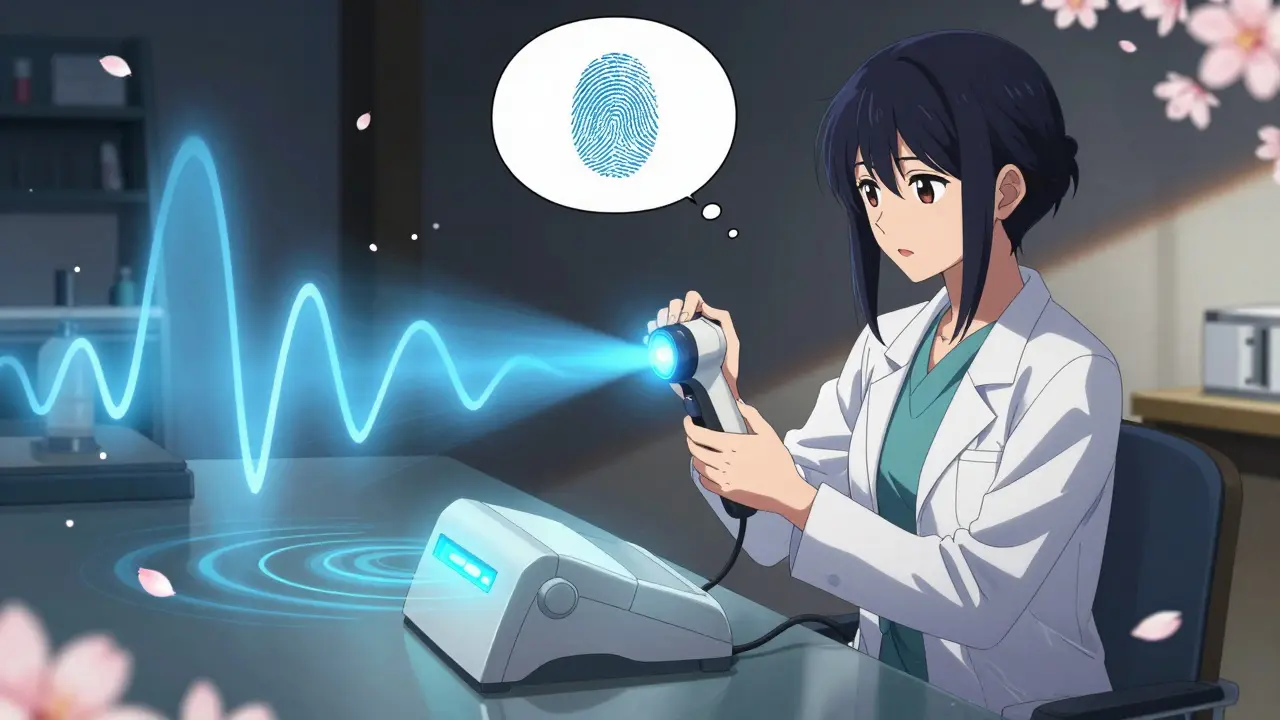
For serious verification, you need more than a flashlight. Hospitals and large pharmacies use handheld spectrometers - devices that analyze the chemical makeup of the pill itself. NIR (Near-Infrared) spectroscopy is the most common. Devices like the Thermo Fisher TruScan RM weigh just 1.4 kg and can scan a tablet in under 15 seconds. It doesn’t tell you if the pill is fake - it tells you if the chemical structure matches the real one. A 2020 study in the American Pharmaceutical Review showed that NIR detected counterfeit Plavix® generics with 95% accuracy by spotting differences in coating thickness and moisture content - things no human eye could see. Raman spectroscopy is even more precise. It identifies specific molecules, like the active ingredient (API). But it struggles with dark pills because of fluorescence interference. That’s why NIR is preferred for tablets, while Raman works better for liquids or capsules. These devices cost $15,000-$50,000. Most community pharmacies can’t afford them. But some regional verification centers - now set up in 22 U.S. states - offer free testing for local pharmacists. If you suspect a fake, call your state’s pharmacy association. They’ll often test it for you.The Human Factor: What Pharmacists See
Real-world experience matters more than any manual. On Reddit’s r/pharmacy, pharmacists share stories of catching fakes. One found a fake Nexium® because the expiration date font was thinner. Another noticed the blister pack had slightly different perforation lines. A third saw that the tablet color was off - a little too yellow. These aren’t big differences. They’re subtle. But trained eyes catch them. The National Community Pharmacists Association surveyed 1,500 pharmacists in 2022. 68% said verifying generics was harder than verifying branded drugs. Why? Two main reasons:- 84% reported inconsistent security features - some generics have holograms, others don’t.
- 76% said they lacked reference samples to compare against.
What You Can Do
You don’t need a degree in pharmacy to help stop fake drugs. Here’s what you can do:- Check the packaging - look for font errors, misaligned text, weird colors.
- Use a UV light - shine it on the label. Look for hidden marks.
- Scan the barcode - if your pharmacy’s app says "invalid," ask why.
- Compare pills - if you’ve taken this generic before, does it look or taste different? Even a slight change matters.
- Report it - if something feels off, tell your pharmacist. They can send it to the FDA’s MedWatch system.