
When you’re a veteran relying on VA healthcare, your prescriptions don’t work like they do at a regular pharmacy. The VA doesn’t just fill your script - it controls what drugs are available, how much you pay, and whether you get the brand name or the generic version. And here’s the key: VA generic coverage isn’t just a policy. It’s the backbone of how the system saves money without cutting corners on your care.
How the VA Formulary Works - And Why It’s Different
The VA National Formulary is a single, nationwide list of medications that every VA clinic and hospital must have on hand. It’s not optional. If it’s on the list, you can get it. If it’s not, you usually can’t - unless your doctor gets special approval. This isn’t like Medicare Part D, where each plan has its own list and changes every year. The VA keeps things stable. They update the formulary monthly, but the big rules - like always choosing generics when available - stay the same. The system has three tiers. Tier 1 is for preferred generics. That’s where most veterans land. Tier 2 includes non-preferred generics and some brand-name drugs that don’t have a generic yet. Tier 3 is for specialty medications - expensive drugs for complex conditions like cancer or autoimmune diseases. The copay jumps with each tier. For Tier 1, most veterans pay $0 to $5 for a 30-day supply. For Tier 3, it can be $20 or more. Compare that to commercial insurance, where a generic like atorvastatin might cost $20-$50. At the VA? Often $5.Why Generics Are the Default - And Why That Matters
The VA doesn’t just prefer generics. It mandates them. If a generic version of your drug exists, you get the generic - unless your doctor proves you need the brand. This isn’t about saving the government money alone. It’s about making sure you get the same results, at a fraction of the cost. Studies show the VA achieves a 92% generic use rate. That’s higher than any other major U.S. payer, including Medicare and private insurers. Why? Because the VA doesn’t just accept generic labels. They test them. They track outcomes. They compare real-world effectiveness. And they’ve found that, for nearly every drug, the generic works just as well. Take sertraline, the generic version of Zoloft. A veteran on Reddit said switching to the VA’s generic version cut his monthly cost from $15 to $0 - with zero difference in how he felt. That’s not luck. That’s science. The VA’s National Drug Formulary Committee reviews every new drug using strict clinical data. They look at effectiveness, safety, and cost. If a cheaper generic does the same job, it wins.What’s Covered - And What’s Not
The VA formulary covers thousands of medications across common conditions. Tier 1 includes everyday drugs like:- Alendronate (for osteoporosis)
- Atorvastatin (for cholesterol)
- Hydrochlorothiazide (for high blood pressure)
- Fluoxetine and sertraline (for depression and anxiety)
- Aspirin, ibuprofen, allopurinol
How to Check If Your Drug Is Covered
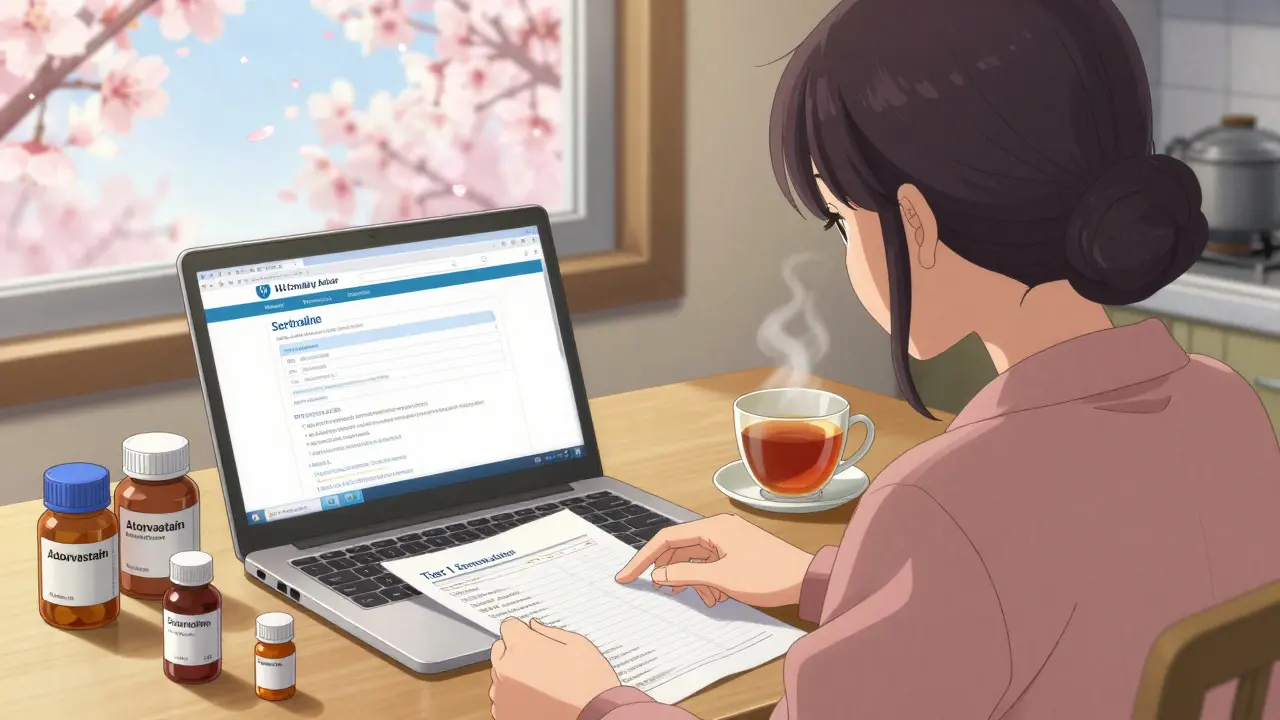
You don’t have to guess. The VA gives you tools. Use the VA Formulary Advisor. It’s free, online, and updated monthly. Type in your drug’s name - brand or generic - and it tells you:- Is it on the formulary?
- What tier is it?
- What’s the copay?
- Do you need prior authorization?
Meds by Mail - The Hidden Advantage
Most veterans don’t realize how much they save with the VA’s mail-order program. If you take a maintenance medication - something you use every day - you can sign up for Meds by Mail. You get a 90-day supply delivered to your door, with no copay for Tier 1 and Tier 2 drugs. No deductible. No pharmacy trips. For CHAMPVA beneficiaries, it’s even better: $0 out-of-pocket for most generics. The VA says 87% of users are satisfied with the service. Why? Because it removes barriers. No driving to the clinic. No waiting in line. No confusion about coverage. Just your meds, on time, every time.What Veterans Say - And What They Struggle With
Most veterans appreciate the low costs. But it’s not perfect. Some complain about delays getting new drugs. A veteran on the Veterans Benefits Network wrote in November 2025: “My provider wanted me on Wegovy for weight loss. I had to fight for three months just to get a prior auth form.” That’s not uncommon. The VA is cautious with high-cost drugs, even if they’re FDA-approved. Others worry about switching from brand to generic. The VA’s own 2024 report found that 12% of veterans initially doubted the generic’s effectiveness. But after talking to their provider, 94% stayed on the generic - and reported no difference in how they felt. The biggest confusion? Tier differences. About 35% of new enrollees mix up Tier 1 and Tier 2 copays. That’s why the VA now offers video tutorials on their website and trains pharmacy staff to explain it in plain language. No jargon. Just: “This one’s $5. This one’s $15. This one needs approval.”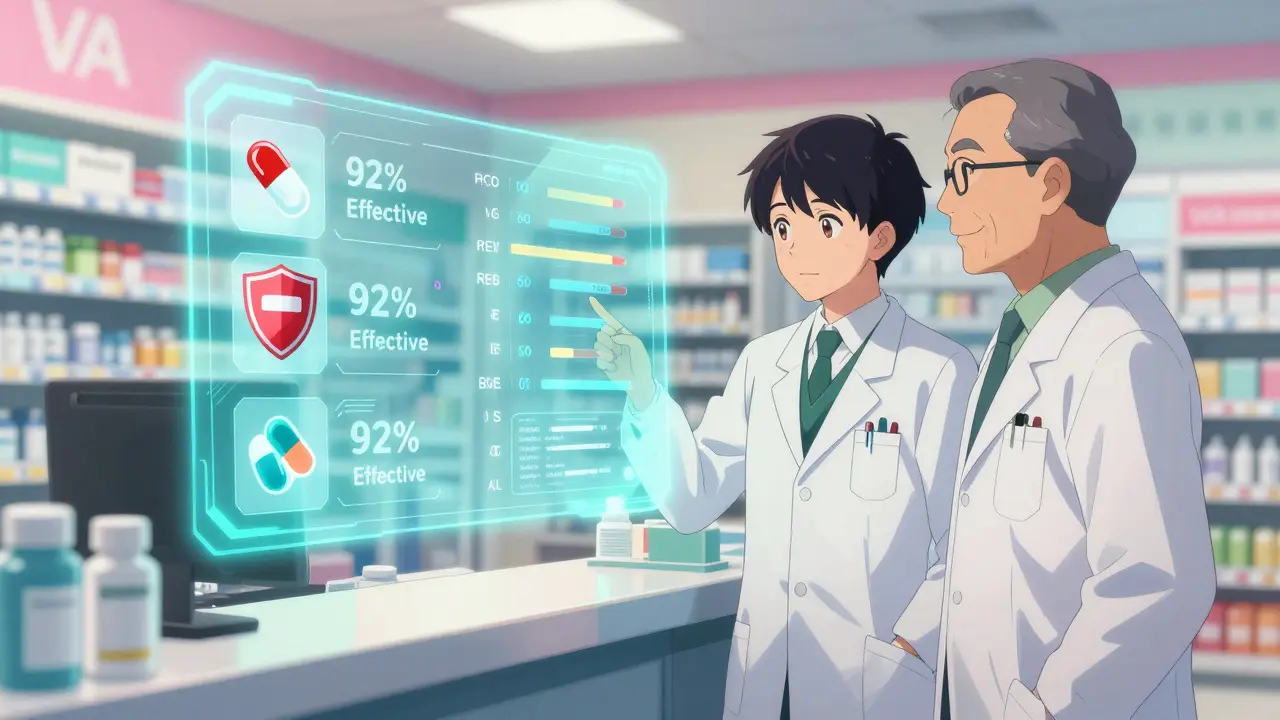
How It Compares to Other Insurance
Let’s be clear: the VA system is different - and often better - than commercial plans. - Medicare Part D has five tiers. Specialty drugs can cost $500+ per month. The VA has three tiers. Same drugs, often $20 or less. - Commercial insurance averages $2,700 per person per year in drug costs. The VA? Around $1,850. That’s a 30% savings. - Generic use: VA = 92%. Commercial average = 89%. Medicare = 85%. The VA doesn’t just offer cheaper drugs. It offers smarter drug use. They use data, not marketing. They pick what works, not what’s advertised.What’s Coming Next
The VA is upgrading. By late 2026, their electronic health system will use AI to suggest generic alternatives in real time when a doctor writes a prescription. If you’re prescribed a brand-name drug with a generic option, the system will pop up a suggestion: “This generic is equivalent and costs $0.” It’s not pushing - it’s informing. They’re also expanding access to specialty drugs for rare conditions. The 2025-2027 Pharmacy Strategic Plan includes more oncology and genetic testing options. The goal? To match the right drug to the right veteran - faster, cheaper, and more accurately.What You Need to Do Now
If you’re a veteran on VA healthcare:- Check your current prescriptions on the Formulary Advisor.
- Ask your provider: “Is there a generic version?” If they say no, ask why - and if prior authorization is possible.
- Sign up for Meds by Mail if you take daily medications. It’s free and saves time.
- Call 1-800-877-8339 if you’re confused. No judgment. Just help.
Does the VA always give me generic drugs?
Yes - unless your doctor documents a medical reason you need the brand-name version. The VA’s policy is generic-first. If a generic exists and is approved by the FDA, you’ll get it. This is standard across all VA facilities.
How do I know if my medication is on the VA formulary?
Use the VA Formulary Advisor tool on VA.gov. Just type in your drug’s name - brand or generic - and it shows you if it’s covered, what tier it’s on, and your copay. You can also call the VA Pharmacy Benefits line at 1-800-877-8339 for help.
Can I get brand-name drugs through the VA?
Yes, but only if there’s a documented medical reason. For example, if you had an allergic reaction to a generic filler, or if a generic didn’t work for you in the past. Your provider must submit a prior authorization request explaining why the brand is necessary.
Why isn’t my weight-loss drug covered by the VA?
The VA covers GLP-1 drugs like Wegovy and Ozempic only for FDA-approved uses: type 2 diabetes, cardiovascular disease, or specific obesity-related conditions like metabolic-associated steatohepatitis. If your doctor wants to prescribe it just for weight loss, the VA won’t approve it under current policy (as of January 2025).
Is Meds by Mail really free?
For Tier 1 and Tier 2 medications, yes - no copay, no deductible. You get a 90-day supply delivered to your home. This is especially valuable for maintenance drugs like blood pressure or cholesterol meds. Some refrigerated or injectable drugs have shipping limits, so check the VA’s Meds by Mail guide before signing up.
How often does the VA update its formulary?
The VA updates its formulary monthly. New drugs are added, restrictions change, and tier placements shift. But the core rules - like generic-first coverage - stay consistent. You can see all changes in the VA National Formulary Monthly Decision Newsletter, posted on VA.gov.
Can I use my VA pharmacy benefits at a regular pharmacy?
Only through the VA’s Community Care program - and only if your VA provider refers you. For routine prescriptions, you must use VA pharmacies or Meds by Mail. If you use a non-VA pharmacy without authorization, you’ll pay full price and won’t be reimbursed.
VA generics saved me $400/month on my antidepressants. No joke. Zero copay. I didn’t even notice the switch.
This is the only healthcare system in America that actually works like it’s supposed to. The VA doesn’t care about pharma ads or stock prices - they care if the pill works. And guess what? It does. Stop comparing it to private insurance. It’s not even the same game.
Why are we even talking about this? The VA’s formulary is just socialist price controls disguised as healthcare. You think generics are better? They’re just cheaper. And if you don’t like it, go get private insurance like a real American.
Think about it - the VA doesn’t treat medication like a commodity. It treats it like a tool. And tools are meant to be efficient, not branded. The capitalist model of healthcare turns every pill into a status symbol - ‘Oh, I take Zoloft, not sertraline, because it’s premium.’ But science doesn’t care about marketing. The VA gets that. We’ve been conditioned to equate cost with quality, but that’s a lie sold to us by people who profit from our confusion. The real question isn’t ‘Is the generic the same?’ It’s ‘Why does anyone pay more?’
So if I need a brand-name drug for a real reason, like allergies to fillers, do they actually approve it? Or is it a nightmare to get?
India’s healthcare is a mess, but at least the VA shows what real public care looks like. We need this everywhere. Not just for vets - for everyone.
I had to fight to get my dad’s specialty med approved. Took 6 weeks. But once it went through? It changed his life. So yeah, the process is slow - but it’s not broken. It’s just careful.
They’re not just saving money - they’re saving sanity. No more pharmacy lines. No more surprise bills. No more ‘Why is this $200?!’ Just… meds. On time. Every time. It’s like the VA finally remembered we’re human beings, not revenue streams.
just signed up for meds by mail and it’s like… magic? my blood pressure med came in a cute little box with a thank you note. no joke. i cried a little. this is the kind of care we should expect.
Generic utilization rate at 92%? That’s not policy - that’s clinical governance. The VA’s formulary committee operates like a precision instrument. No lobbying. No formulary bias. Just data.
So the VA uses AI to suggest generics? Cool. So next they’ll just auto-fill prescriptions and we’ll all be like ‘Thanks, robot doctor.’ Next thing you know, the VA’s sending us text: ‘You’re due for metformin. You’re welcome.’
My brother got denied Wegovy for weight loss - but got approved for it after he got diagnosed with prediabetes. The system’s not perfect, but it’s not arbitrary. It’s based on evidence. That’s more than I can say for my old insurance.