
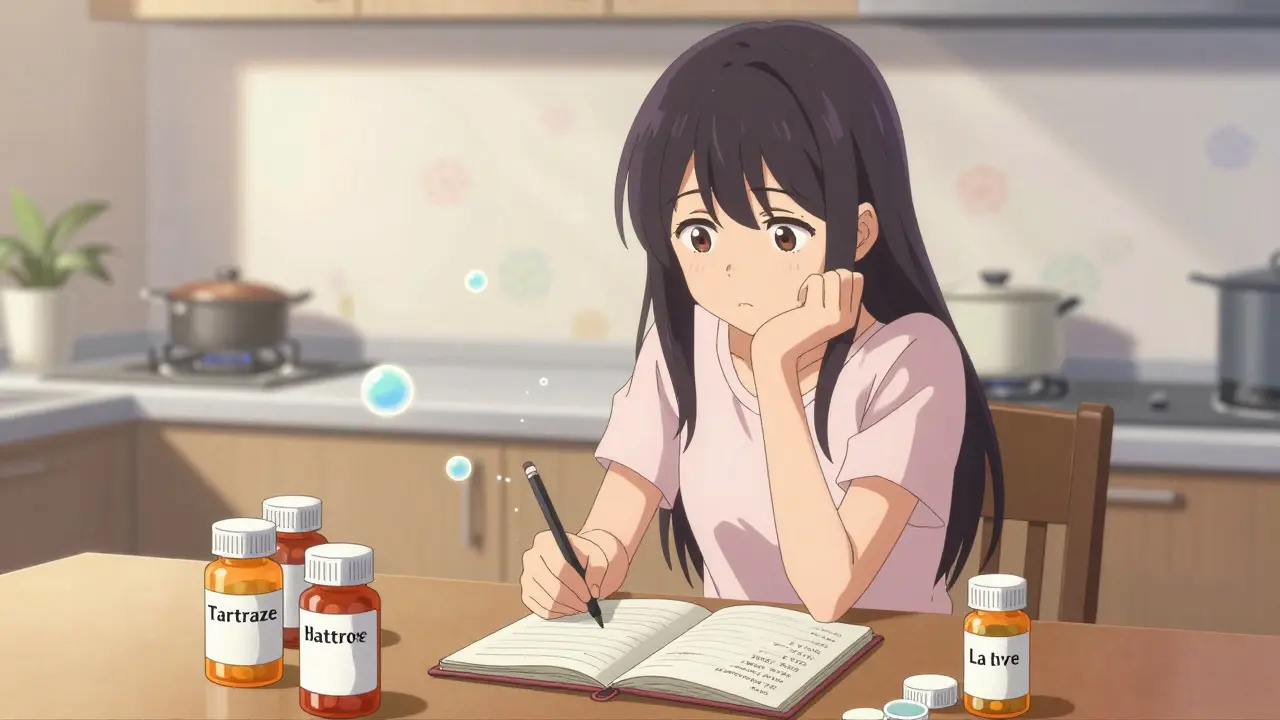
When you take a generic medication, you assume it works just like the brand-name version. And for the most part, it does. But what you don’t see on the label - the inactive ingredients - might be causing problems you never expected. These are the fillers, dyes, preservatives, and binders that help the pill hold together or taste better. They don’t treat your condition. But when you take multiple generic drugs at once, these harmless-seeming substances can add up - and sometimes clash.
What Are Inactive Ingredients, Really?
Inactive ingredients, also called excipients, are the non-drug parts of a pill or liquid. Think lactose (a milk sugar), propylene glycol (a solvent), titanium dioxide (a whitener), or tartrazine (a yellow dye). They help with manufacturing, shelf life, swallowing, or even color. But here’s the catch: every generic manufacturer picks their own mix. Two pills with the same active ingredient - say, metformin for diabetes - can have completely different fillers. One might use lactose. Another might use corn starch. One might have red dye. Another might be dye-free.
The FDA doesn’t require generics to match the inactive ingredients of the brand-name drug or even each other. All they need to prove is that the active ingredient gets into your bloodstream at the same rate and amount - within 80% to 125% of the original. That’s it. The rest? Up to the manufacturer.
Why This Matters When You Take Multiple Generics
Most people don’t take just one medication. The average Medicare beneficiary takes nearly five prescriptions a day. If each of those is a different generic, you could be swallowing up to 2.8 grams of inactive ingredients daily. That’s like eating half a teaspoon of filler, dye, and preservative - every single day.
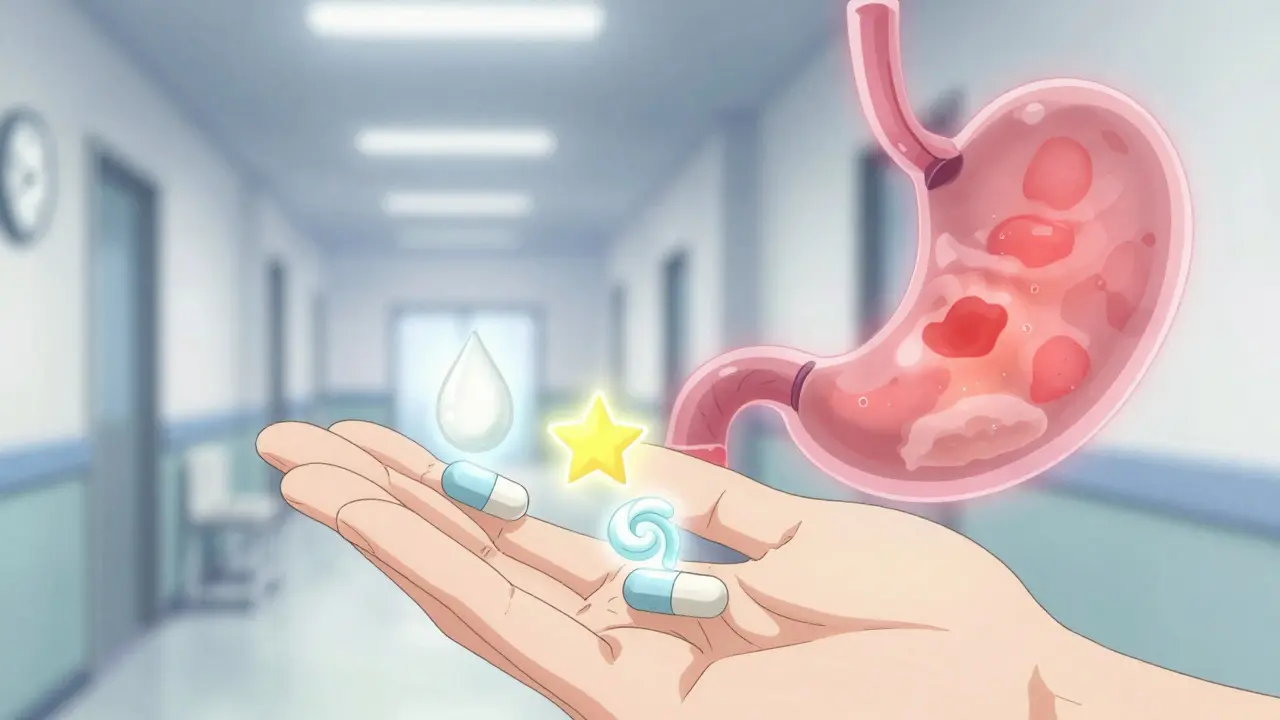
Now imagine you’re on three different generics that all contain lactose. Each pill has 75mg of it. That’s 225mg per day. Sounds small? For someone with lactose intolerance, even 1-2 grams can cause bloating, cramps, or diarrhea. You might not realize your stomach issues aren’t from food - they’re from your meds.
Same goes for propylene glycol. Found in 46% of liquid generics, it can cause nausea, headaches, or even seizures in high doses - especially in kids or people with kidney problems. Tartrazine? It triggers allergic reactions in about 4% of people. If you’re on three different generics with this dye, your risk isn’t tripled - it’s compounded.
Real Cases: When ‘Harmless’ Ingredients Cause Harm
There are documented cases where patients had no reaction to a single generic - until they started taking a second or third. One patient on Reddit described how switching to three different generic thyroid meds - each with lactose - caused severe bloating and diarrhea. He’d been fine on each one individually. But together, the lactose added up past his personal tolerance threshold.
Another case involved an elderly woman on digoxin, a heart drug with a narrow safety margin. She switched between generic versions and suddenly her heart rhythm went off. Turns out, one generic used a different binder that slowed absorption. Her blood levels dropped just enough to cause symptoms - not enough to show up on routine tests, but enough to land her in the ER.
The FDA’s Adverse Event Reporting System has over 1,500 reports from 2020-2023 tied to unexplained GI distress, skin rashes, or reduced drug effectiveness. Many of these were later traced back to excipient interactions. Pharmacists report seeing one such case per month on average. But most doctors never ask about inactive ingredients.
Brand vs. Generic: The Hidden Difference
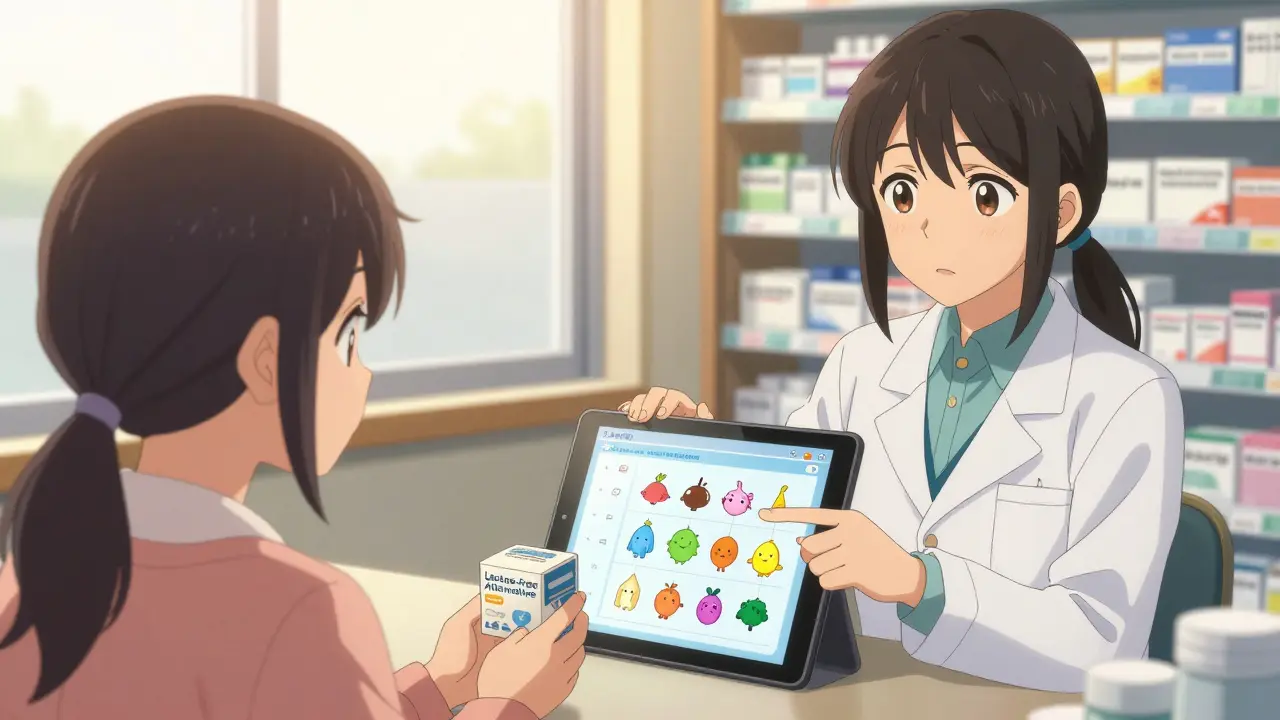
Brand-name drugs usually stick to the same formula for years. Their manufacturers have the resources to test consistency. Generics? They change suppliers, switch fillers, or update packaging to cut costs. A 2021 FDA analysis found 27 different inactive ingredient combinations for levothyroxine - the same active drug, but 27 different pills.
One study showed that switching between generic versions of an antiepileptic drug caused a 15-20% drop in peak blood levels - enough to trigger seizures in some patients. The active ingredient was identical. The difference? A single excipient that changed how quickly the drug dissolved in the stomach.
And it’s not just about allergies. Some excipients interfere with absorption. Others trigger inflammation. A few even interact with other drugs - not chemically, but physically. For example, a coating on one pill might slow down the release of another if taken together.
Who’s at Risk?
You’re more likely to run into problems if you:
- Take five or more medications daily
- Have known allergies (lactose, sulfites, dyes)
- Suffer from irritable bowel syndrome, asthma, or eczema
- Are elderly or have kidney/liver disease
- Take drugs with a narrow therapeutic window (like warfarin, digoxin, or lithium)
Lactose intolerance affects about 65% of the global population. But many don’t know they have it - or think it only matters for dairy. In pills, even small amounts can trigger symptoms. Sulfites, found in some injectables and inhalers, can cause asthma attacks in 5-10% of asthmatics. And children? They’re more sensitive because their bodies are smaller and still developing.
What You Can Do
Don’t stop your meds. But do take control:
- Ask your pharmacist for the full list of inactive ingredients in each generic you take. They have access to the FDA’s Inactive Ingredient Database and DailyMed.
- Compare all your prescriptions. Look for the same excipient across multiple pills. Lactose? Propylene glycol? FD&C Yellow No. 5? Flag them.
- Request alternatives. If you’re reacting to something, ask for a different generic - or even the brand if it’s affordable. Many manufacturers offer lactose-free or dye-free versions.
- Keep a log. Note when symptoms start after switching generics. Did your rash appear after you switched from Generic A to Generic B? That’s a clue.
- Use digital tools. Apps like MedCheck AI (launched in 2023) scan your prescriptions and flag potential excipient conflicts with 89.7% accuracy.
Pharmacists are trained to spot these issues - but only if you ask. Only 38% of independent pharmacies have formal excipient-checking protocols. Chain pharmacies are better, but it’s still not standard.
The Bigger Picture: Regulation Is Catching Up
The FDA has been slow to act. For years, they said: ‘No evidence of harm.’ But now, they’re changing. In January 2024, they launched the Inactive Ingredient Transparency Initiative. By December 2025, all manufacturers must list every excipient in digital drug labels. That’s a big step.
The European Medicines Agency already requires manufacturers to justify using high-risk excipients like sulfites or tartrazine. The U.S. may follow. A proposed rule in 2024 could require cumulative exposure assessments for certain ingredients when patients take multiple generics.
By 2030, experts predict excipient-related adverse events could cost the U.S. healthcare system over $2 billion a year - mostly from ER visits, hospitalizations, and ineffective treatments. That’s avoidable.
Bottom Line
Generic drugs save money. They’re safe for most people. But they’re not all the same. Inactive ingredients aren’t just filler - they’re part of the story. When you take multiple generics, you’re not just combining drugs. You’re combining a cocktail of hidden chemicals. Most of the time, it’s fine. But sometimes, it’s not.
If you’re on multiple medications - especially generics - talk to your pharmacist. Ask: ‘What’s in this pill besides the active ingredient?’ Don’t assume it’s harmless. Your body might be telling you otherwise.
I never thought about this until my stomach went nuts after switching generics. Turned out three of my pills had lactose. I'm not even dairy person but it wrecked me. Now I check every label.
This is real. My mom had unexplained dizziness until we checked the fillers. One generic had propylene glycol. She's got kidney issues. Big red flag.
I'm from India and we use so many generics here. No one talks about this. My aunt got rashes from yellow dye in her blood pressure med. She thought it was food. Took months to figure out.
THIS IS WHY WE NEED TO BAN GENERIC DRUGS THEY'RE POISON WITH FILLERS AND DYES AND NO ONE CARES ABOUT US PATIENTS THE FDA IS A CORRUPT JOKE AND DOCTORS ARE ASLEEP
In my pharmacy rotations, we had a patient who had seizures after switching generics. Not the active ingredient. One binder changed the dissolution rate. It was terrifying. No one asked about excipients.
It's like your body is whispering to you through bloating, rashes, fatigue - and we're trained to ignore it because the pill says 'same active ingredient'. But your body doesn't care about FDA math. It cares about what's actually touching your cells. Pay attention to the whispers.
Lactose in meds? Please. Everyone's allergic to something. This is just hypochondria with a PhD.
I spent six months researching this after my cousin went into cardiac arrest. Turns out two different generics of digoxin had different binders. One slowed absorption just enough to drop levels below therapeutic. The ER docs had no clue. It took a pharmacist to spot it. This isn't conspiracy. It's pharmacology 101 and no one teaches it.
You guys need to start asking your pharmacists. Seriously. I did. They gave me a printout with every filler in every med. I was shocked. Now I only take the ones with corn starch. No more lactose. Life changed.
So you're telling me the $2 pill might have more junk than the $20 one? Wow. Guess I'll just keep paying extra then. Thanks for the tip.
The fundamental epistemological flaw here lies in the reductive assumption that bioequivalence implies therapeutic equivalence. The excipient matrix constitutes an ontological variable in pharmacokinetic space - one that the FDA’s 80-125% paradigm deliberately obfuscates. We are not merely ingesting molecules; we are negotiating with chemical ecosystems.
i had no idea this was a thing. my mom takes 7 meds. i just looked up one and it had tartrazine. she gets headaches all the time. maybe this is why. thanks for sharing
This is why I always ask for the brand name when I can afford it. I'm not rich, but I'm not risking my health over $5 a month. Knowledge is power - and so is asking the right questions.
In Nigeria, we use generics because we have no choice. But I noticed my cousin got worse after switching. His skin turned red. I asked the pharmacist - he just shrugged. This needs to change. Not just in the US.