
Medication Safety Risk Checker
Review the following factors regarding your medication. Select all that apply to determine the risk level of your product.
1. Where did it come from?
| Feature | Genuine Medication | Counterfeit Warning Signs |
|---|---|---|
| Packaging | Crisp printing, intact seals, official holograms | Spelling errors, blurry logos, missing seals |
| Pill Appearance | Consistent color, shape, and texture | Off-color, crumbling edges, unusual smell |
| Price | Standard market pricing | "Too good to be true" discounts |
| Source | Licensed pharmacy with prescription | Social media, unregulated websites |
The Hidden Dangers of Falsified Drugs
It's a common misconception that a fake drug is just a "sugar pill" that does nothing. In reality, the danger is far more complex. Some fakes contain the right active ingredient but in the wrong dose-too little, and your condition goes untreated; too much, and you risk an overdose. Others are laced with dangerous fillers. For example, the DEA (Drug Enforcement Administration) found that 7 out of 10 seized fake pills in 2024 contained lethal doses of fentanyl, a powerful synthetic opioid.
Then there are the "substandard" products. These aren't always intentional fakes but are made in filthy conditions with poor quality control. In some regions, the World Health Organization (WHO) notes that up to 30% of the pharmaceutical market consists of these substandard or falsified products. In Africa, counterfeit antimalarials are estimated to cause over 120,000 deaths every year because patients believe they are being treated when they are actually receiving useless or harmful chemicals.
Red Flags: How to Spot a Fake
Criminal networks are getting better at mimicking the real thing, but they still make mistakes. If you're reviewing your medication, start with the packaging. Look for typos-even a single missing letter in the manufacturer's name is a huge warning sign. Check the printing quality; if the ink looks smeared or the colors are slightly off compared to your last refill, stop immediately.
The physical pill itself can tell a story. Is the color slightly different? Does it have an odd smell or a powdery texture that wasn't there before? A nurse shared a terrifying story on Reddit about a family member who nearly died from counterfeit insulin. The packaging looked perfect, but the vial felt lighter than it should have. That tiny difference in weight was the only clue that the insulin lacked the necessary active ingredients.
Be wary of the source. If a website claims to be a "Canadian Pharmacy" but doesn't require a prescription, be suspicious. The FDA (Food and Drug Administration) reported that 85% of drugs from these so-called Canadian sites actually come from other countries where regulations are lax or nonexistent.
Safe Sourcing: Avoiding the Pharmacy Trap
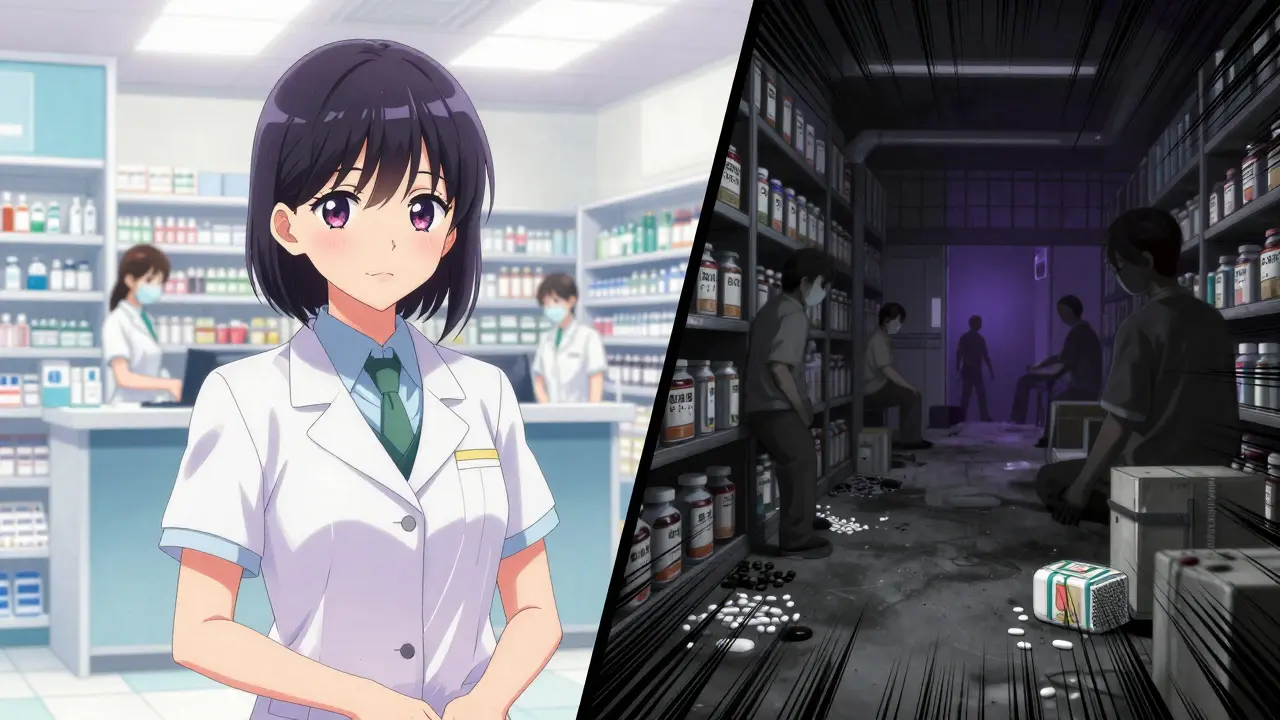
The easiest way to stay safe is to avoid the temptation of cheap, prescription-free medications online. If a site offers a "miracle cure" for a chronic condition at a fraction of the cost, it's likely a scam. Remember, 97% of websites selling prescription drugs operate illegally. To ensure you're buying from a legitimate source, look for the VIPPS seal (Verified Internet Pharmacy Practice Sites) or verify the pharmacy through the National Association of Boards of Pharmacy (NABP).
Legitimate pharmacies will always require a valid prescription from a licensed healthcare provider. If a site allows you to just fill out a quick online questionnaire and ship the drugs, you are taking a massive risk with your health. Stick to pharmacies you know and trust, or use the official verification tools provided by health authorities.
The High-Tech Battle Against Counterfeits
While criminals use 3D printing to make better fake boxes, regulators are fighting back with science. The Drug Supply Chain Security Act (DSCSA) in the U.S. is pushing for full electronic tracing of drugs. This means every bottle has a digital fingerprint that can be tracked from the factory to the pharmacy shelf.
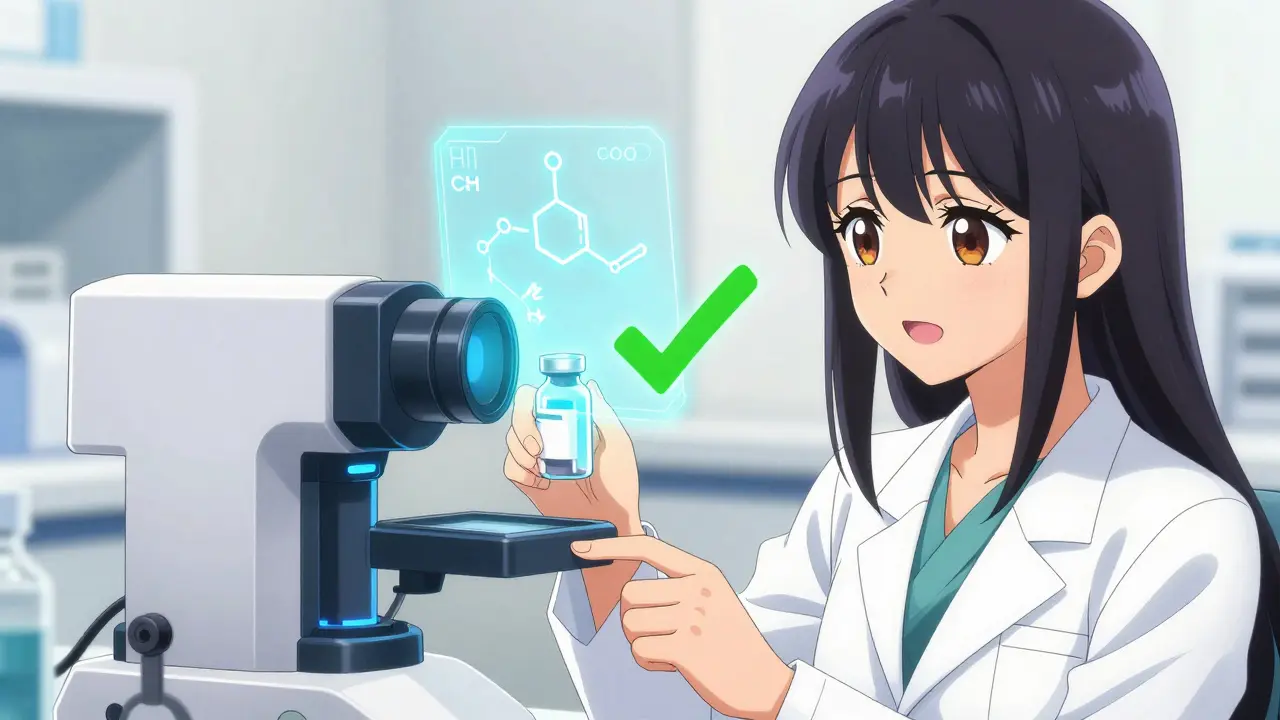
We're also seeing a surge in Spectroscopy is a scientific technique used to identify the chemical composition of a substance by analyzing how it interacts with light. Portable spectroscopy devices are now being used in the field to scan a pill and instantly tell if the chemical signature matches the real medication. This technology is expanding rapidly, especially in Asia-Pacific regions where fake drug prevalence has been climbing.
What to Do if You Suspect a Fake
If you suspect your medication is counterfeit, do not take another dose. Your first step should be to contact your prescribing doctor or a licensed pharmacist. They can help you determine if the medication is abnormal and advise you on the next steps for your health.
Reporting the fake is just as important as avoiding it. Use tools like the MedSafety app, which allows users to report suspicious medical products directly to the WHO. By reporting the batch number and where you bought it, you help authorities shut down the criminal networks and prevent others from getting sick.
Can I tell if a drug is fake just by looking at the pill?
Not always. While differences in color, shape, or texture are red flags, modern counterfeiters can replicate the look of a pill perfectly. The most reliable way to tell is through laboratory testing or by ensuring the drug came from a verified, licensed pharmacy.
Are counterfeit drugs more common in some countries than others?
Yes. While they exist globally, they are far more prevalent in low- and middle-income countries. In some parts of Nigeria, for example, it's estimated that up to 40% of available medicines are counterfeit due to weaker regulatory oversight.
Why would someone sell a drug with no active ingredients?
It's purely about profit. Active pharmaceutical ingredients (APIs) are expensive to produce. By using chalk, starch, or cheap fillers, criminals can maximize their margins while tricking the buyer into thinking they've bought a high-value medication.
Is it safe to buy medication from "Canadian" online pharmacies?
Only if the pharmacy is legitimate and licensed. Many sites claim to be Canadian to sound trustworthy, but the FDA found that 85% of these sites actually ship from other countries and often sell counterfeit or substandard products.
What is the danger of taking a fake antibiotic?
Beyond the fact that your infection won't be treated, fake antibiotics with low doses of the active ingredient can contribute to antimicrobial resistance. This makes bacteria stronger and harder to kill, creating a broader public health crisis.
Next Steps for Your Safety
Whether you are managing a chronic condition or just buying a few rounds of antibiotics, keep these rules in mind:
- Audit your source: If you're buying online, check for a physical address and a valid license. Avoid social media marketplaces entirely.
- Inspect the box: Check for tamper-evident seals and correct spelling. If the packaging looks "cheap," the drug probably is too.
- Monitor your reaction: If your medication suddenly stops working, or you experience unexpected side effects, stop taking it and call your doctor immediately.
- Verify the NDC: For those in the U.S., you can verify National Drug Code (NDC) numbers through official FDA databases to ensure the product is registered.
- Drug Information (75)
- Health and Wellness (60)
- Pharmacy Information (32)
- Medical Conditions (24)
- Supplements (5)
- Diabetes (4)
- Travel Health (3)
- Mental Health (3)
- Heart Health (2)
- Parenting (2)
-
Prograf (Tacrolimus) vs. Alternative Immunosuppressants: A Detailed Comparison
12 Oct 2025 -
How to Choose OTC Eye Drops for Allergies, Dryness, and Redness
2 Dec 2025 -
Top 10 Drug Information Platform Alternatives in 2024
31 Oct 2024 -
Antihistamine Allergies and Cross-Reactivity: What to Watch For
22 Jan 2026 -
How genericday.com Makes Online Pharmacies Safer and Cheaper for Prescription Drugs
27 Jul 2025
© 2026. All rights reserved.