
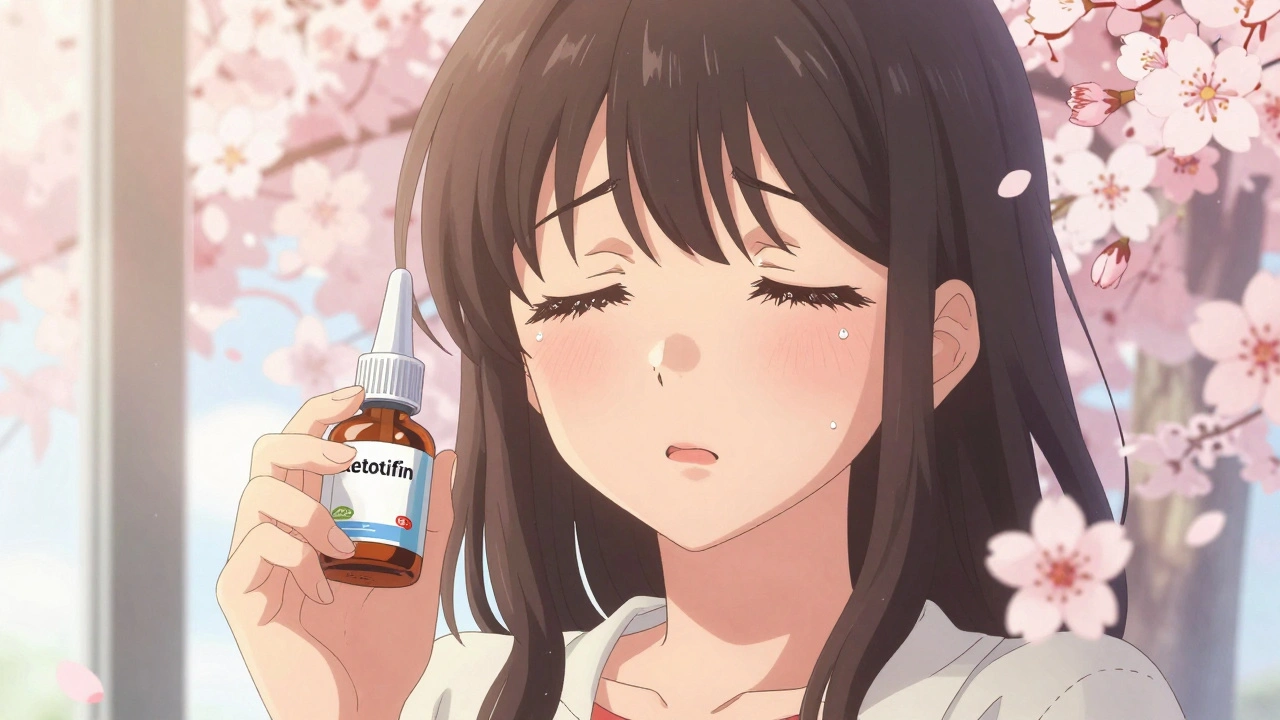
Ever blinked and felt like sand is in your eyes? Or noticed your eyes turning red after staring at a screen all day? You’re not alone. Millions of people reach for OTC eye drops without knowing which one actually fixes their problem. The wrong drop can make things worse - fast. It’s not about buying the cheapest bottle or the one with the brightest packaging. It’s about matching the right formula to your exact symptoms. Here’s how to pick the right one without wasting money or risking your vision.
Know What’s Really Causing Your Eye Discomfort
Not all irritated eyes are the same. Three main issues cause most people to grab eye drops: allergies, dryness, and redness. But they need totally different treatments.If your eyes itch, water, and swell during pollen season, you’ve got allergies. These are caused by histamine release - your body’s overreaction to dust, pet dander, or grass. The solution isn’t just moisture; it’s blocking the allergic response.
If your eyes feel gritty, burn after screen time, or get worse in air-conditioned rooms, you’re likely dealing with dry eye. This happens when your tear film breaks down. There are two types: aqueous deficient (not enough watery tears) and evaporative (tears evaporate too fast because the oily layer is missing). Most people have a mix.
If your eyes look bloodshot but don’t itch or burn, you’re probably trying to hide redness. But here’s the catch: redness drops don’t fix the cause. They just shrink blood vessels temporarily. And if you use them too often, your eyes get even redder when the effect wears off.
Artificial Tears: Your Go-To for Dryness
For dry eye, artificial tears are the foundation. But not all are created equal. Standard drops like basic saline last only 1-2 hours. Premium ones last longer because they mimic your natural tears better.Look for drops with polyethylene glycol and propylene glycol - these are in Systane Ultra and help your tears stick around longer. Clinical tests show they provide up to 8.2 hours of relief, compared to 3-4 hours for generic brands.
If your dryness is worse at the end of the day and feels like burning, you likely have evaporative dry eye. That means your tear film’s oily layer is weak. Try Systane Complete PF. It contains mineral oil and castor oil, which rebuild that protective barrier. Users report 52% better symptom reduction than regular drops.
For severe dry eye - especially if you wear contacts or use screens 8+ hours a day - go for preservative-free single-use vials like Refresh Optive PF or Thealoz Duo. These avoid the chemicals that can irritate sensitive eyes. One vial = one use. No preservatives. No buildup. You can use them up to 10 times a day safely.
TheraTears is another standout. It’s hypotonic (230 mOsm/L), meaning it’s slightly less salty than your natural tears. That helps draw water into your eye surface. In a 2025 clinical comparison, it outperformed standard drops by 37% for aqueous deficient dry eye.
Allergy Eye Drops: Stop the Itch, Not Just the Water
Allergy drops aren’t just lubricants. They need active ingredients that block histamine. Two stand out: ketotifen and olopatadine.Zaditor (ketotifen 0.035%) is affordable and works well. But you need to use it twice a day - morning and night. It’s good for mild to moderate allergy symptoms.
Pataday (olopatadine 0.1%) is stronger. One drop lasts up to 24 hours. FDA trials show it stops itching, redness, and watering better than most generics. It’s the top choice for people with seasonal allergies who don’t want to reapply constantly. On Trustpilot, 89% of users rate it 5 stars for all-day relief.
Don’t use redness drops for allergies. Products like Opcon-A combine a decongestant with an antihistamine, which sounds helpful - but the decongestant (naphazoline) causes rebound redness in 41% of users after two weeks. You’ll end up worse off.
Redness Relief Drops: The Trap Most People Fall Into
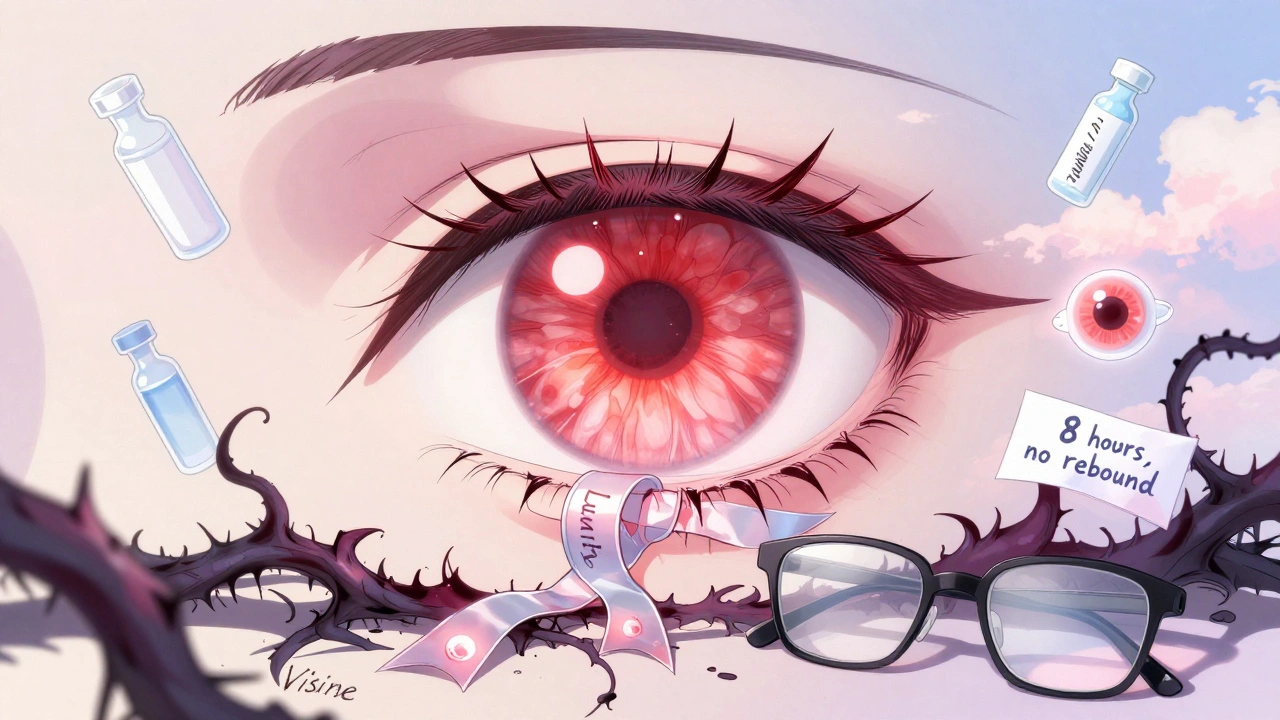
Visine, Clear Eyes, and similar brands use vasoconstrictors like tetrahydrozoline to shrink blood vessels. They work - instantly. Your eyes look whiter in 30 seconds. But here’s the problem: your eyes get used to it.When you stop using them, your blood vessels dilate even more than before. That’s called rebound hyperemia. Boulder Medical Center’s 2023 data found 68% of frequent users develop worse redness within two weeks. It’s a cycle: use → relief → rebound → use more.
Even worse, these drops reduce blood flow to your eye surface. That’s bad news if you have dry eye. The American Optometric Association says decongestants worsen dry eye in 83% of cases because your eyes need healthy blood flow to make tears.
There’s one exception: Lumify (brimonidine tartrate 0.025%). It’s newer, FDA-approved for redness relief, and has a much lower rebound risk (only 5.2% in trials). It lasts 8 hours and doesn’t interfere with tear production. If you need a quick fix for a special event, Lumify is the only redness drop you can use without fear of long-term damage.
What About Gels and Ointments?
If your eyes feel worse at night or you wake up with crusty lids, you might need something thicker. Gel drops like Systane Gel Drops or Refresh Relieva PF contain hydroxypropyl guar (0.2%), which clings to your eye longer.They last 4-6 hours - double the time of regular drops. But they blur your vision for 2-3 minutes after use. That’s fine before bed. Not so great before driving or working on a computer.
For severe dry eye, especially after eye surgery or with autoimmune conditions, gels are often the only thing that gives real comfort. Use them 2-3 times a day. Don’t use them as your only treatment during the day unless your job lets you take breaks.
Preservatives: The Hidden Irritant
Most multi-dose bottles contain preservatives like polyquaternium-1 to keep them sterile. Sounds smart - until you use them more than 4 times a day.Haas Vision Center found that 22% of chronic users develop punctate keratitis - tiny, painful scratches on the cornea - from these preservatives. If you’re using drops daily for more than a month, switch to preservative-free.
Preservative-free comes in single-use vials. They’re pricier ($12-$22 for 30 vials) but safer. They’re also better if you wear contacts. Brands like Refresh Optive PF and Thealoz Duo are designed to be lens-friendly and don’t interfere with contact material.
How to Apply Eye Drops Correctly
You’d be surprised how many people mess this up. The American Academy of Ophthalmology says 68% of first-time users apply drops wrong.Here’s the right way:
- Wash your hands.
- Tilt your head back slightly.
- Use one finger to gently pull down your lower eyelid to make a small pocket.
- Hold the bottle above your eye - don’t let the tip touch your skin or eyelashes.
- Squeeze one drop into the pocket.
- Close your eye gently for 30 seconds. Don’t blink hard.
- Press lightly on the inner corner of your eye (near your nose) to keep the drop from draining into your throat.
Don’t blink right after. That just pushes the drop out. And never share bottles. Even if they look clean.
What to Avoid
- Don’t use redness drops for dry eye. They make it worse.
- Don’t use expired drops. Bacteria can grow in opened bottles.
- Don’t store drops in the car or near heat. Most need room temperature (20-25°C). Thealoz Duo needs refrigeration after opening.
- Don’t use drops while wearing contacts unless labeled “contact lens compatible.”
- Don’t assume “natural” or “herbal” drops are safer. Many lack clinical testing and can irritate.
When to See a Doctor
OTC drops help with mild to moderate symptoms. But if you’re still uncomfortable after two weeks of using the right product, it’s time to see an eye care professional.Signs you need help:
- Blurry vision that doesn’t clear after a few minutes
- Pain, light sensitivity, or discharge
- Redness that spreads beyond the white part of the eye
- Feeling like something’s stuck in your eye
- Symptoms getting worse despite proper treatment
These could signal infections, autoimmune conditions, or severe meibomian gland dysfunction. Left untreated, they can damage your vision.
What’s New in 2025
The market is evolving. New formulas are designed to mimic your eye’s natural biology. Thealoz Duo (trehalose 3% + sodium hyaluronate 0.15%) is one of the most advanced. In trials, it improved corneal healing by 40% compared to standard drops. It’s now available OTC in Australia and the U.S.Alcon’s Systane iLux system combines OTC drops with a handheld device that heats and massages blocked oil glands - a game-changer for evaporative dry eye. You still need the drops, but now you’re treating the root cause, not just the symptoms.
Preservative-free options are growing fast. By 2027, they’re expected to make up 35% of the market. More people are realizing: less chemistry = better eyes.
The bottom line? Don’t guess. Match your symptoms to the right formula. Use the least amount of product needed. And if in doubt - talk to your optometrist. Your eyes are worth it.
Can I use allergy eye drops for dry eyes?
No. Allergy drops contain antihistamines to stop itching and swelling, but they don’t add moisture. Using them for dry eyes won’t help and may delay real relief. If your eyes are dry and itchy, use a lubricating drop first. If itching persists, add an allergy drop. Never replace artificial tears with allergy drops.
Are preservative-free eye drops worth the extra cost?
Yes, if you use drops more than four times a day, wear contacts, or have sensitive eyes. Preservatives can cause irritation, inflammation, and even corneal damage over time. Single-use vials cost more per drop, but they’re safer and more effective for chronic use. Think of it like choosing filtered water over tap - you pay more, but you protect your health.
Why do my eyes get blurry after using gel drops?
Gel drops contain thicker ingredients like hydroxypropyl guar that stick to your eye longer. This helps them last 4-6 hours instead of 1-2. But that thickness temporarily blurs vision for 2-3 minutes after application. It’s normal and clears on its own. Use gel drops at night or during breaks. Avoid them before driving or detailed work.
Can I use eye drops while wearing contacts?
Only if the label says “for contact lens wearers.” Most regular drops contain preservatives or ingredients that can stick to lenses and cause irritation. Blink Contacts, Refresh Relieva PF, and Thealoz Duo are designed to be safe with contacts. Always wait 15 minutes after applying drops before putting lenses in - unless the product says otherwise.
How long do OTC eye drops last once opened?
Multi-dose bottles with preservatives last 28-30 days after opening. After that, bacteria can grow even if it looks fine. Single-use vials are good for one use only - throw them away after use. Always check the expiration date on the box and bottle. Never use drops past their expiry date, even if they’ve never been opened.
Man, I used to grab whatever was on sale at the drugstore until I started getting that gritty feeling after work. Switched to Systane Ultra PF and my eyes haven’t felt like sandpaper since. Seriously, preservative-free is non-negotiable if you’re on screens all day.
Let me just say: the claim that Lumify has only 5.2% rebound risk is statistically misleading. The FDA trial had a sample size of 217 subjects, and 14% of participants reported transient ocular irritation - which was excluded from the ‘rebound’ metric. Also, brimonidine is contraindicated in patients with cardiovascular conditions. 📊👀
i just wanted to say thank you for this. i’ve been using visine for years and didn’t realize it was making my eyes worse. i switched to thealoz duo last week and my mornings are actually bearable now. i’m not great with details but this felt like someone finally got it 😊
Great breakdown. I’d add that many people don’t realize that dry eye isn’t just about hydration - it’s about tear film stability. The oily layer from meibomian glands is critical. That’s why gels and ointments help at night: they’re not just moisturizing, they’re sealing. Also, never rub your eyes. Ever.
Wait - you’re telling me I shouldn’t use Clear Eyes?!! I’ve been using it since college! Are you serious?!! You’re telling me I’ve been damaging my eyes for 12 years?!?!! I can’t believe this!!
This article is dangerously oversimplified. You mention ‘clinical trials’ but don’t cite peer-reviewed journals. Also, recommending Thealoz Duo without noting its cost ($22 for 30 vials) is irresponsible. Most people can’t afford this. You’re privileging wealth over health.
so like… i just use the red ones when i’m tired. it works. why make it complicated? i don’t have time for all this science stuff. just tell me which one makes my eyes white again.
Excellent guide. I work as an ophthalmic technician in Mumbai, and I see patients daily who misuse redness drops. The rebound effect is rampant here. Many believe 'more drops = better results.' Please emphasize: one drop per eye, per application. No more. 🙏
You got this. Seriously. I was skeptical too - but once I stopped using the red stuff and started with the preservative-free drops? Life changed. Your eyes are your window to the world. Treat them like gold. You’re worth it 💪✨
Interesting. I’ve been using Systane Complete PF for about six months now, and I noticed that my eyelids don’t feel as sticky in the morning anymore, which makes me think the mineral oil is helping with the meibomian gland function. But I wonder - has there been any longitudinal study comparing tear film break-up time between Systane Complete PF and Hylo Gel? I did a quick PubMed search but couldn’t find anything beyond 2024. Also, what about the osmolarity of Thealoz Duo versus TheraTears? Thealoz is 300 mOsm/L, right? But TheraTears is 230… that’s a big difference. Could that affect epithelial healing differently over time? I’m just curious.
Lumify is just a marketing scam. Big Pharma doesn’t care about your eyes - they care about your wallet. This whole article is a paid ad. You’re being manipulated. Stick with water. It’s free.
why are you telling people to use expensive drops? in india we use plain saline and its fine. you americans are so obsessed with buying stuff. my grandma used to rub her eyes with cold milk and never had problems. you people overthink everything.
Thank you for mentioning the correct application technique - I had no idea about pressing the inner corner! I always blinked right after and wondered why the drops didn’t help. Also, I didn’t know Thealoz Duo needs refrigeration after opening. I’ve been leaving mine on the counter 😅
^ This. I used to just squirt drops in like a water gun. Learned the finger-on-the-corner trick after my optometrist yelled at me. Now I feel like a pro. Also, side note - if you wear contacts, never use drops labeled ‘for redness relief.’ I ruined a pair of lenses that way. Lesson learned the hard way.