
Every year, thousands of children in hospitals and pharmacies across the world receive the wrong dose of medicine-not because someone was careless, but because a simple number got mixed up. A child’s weight, measured in pounds instead of kilograms, or entered incorrectly into a system, can turn a life-saving dose into a dangerous one. Pediatric medication errors are not rare. In fact, children are three times more likely to suffer a medication error than adults, and nearly half of those mistakes come down to weight-based dosing gone wrong.
Why Weight Matters More in Kids
Adults usually get the same dose of a medicine no matter their size. Kids don’t. Their bodies process drugs differently. A 5-kilogram infant needs a tiny fraction of what a 40-kilogram child needs. Even a small mistake-like confusing 10 kg for 100 kg-can lead to overdose, organ damage, or worse. That’s why weight isn’t just a number on a chart; it’s the foundation of every pediatric dose calculation.Most pediatric medications are dosed in milligrams per kilogram (mg/kg) or milligrams per square meter (mg/m²). That means if the weight is wrong, the dose is wrong. And it’s not just about math. Many errors happen because staff use pounds instead of kilograms, or the weight in the system is outdated. A child admitted last week at 18 kg might now weigh 20 kg after a week of fluids and feeding, but if no one updates the record, the next dose could be too low-or too high.
The Three-Point Verification System
The most effective way to stop these errors isn’t just one tool-it’s a chain of checks. Experts agree: weight-based verification must happen at three critical points.- Prescription entry: When a doctor orders a drug, the system should block submission unless a current weight is entered in kilograms. No weight? No order.
- Pharmacy verification: Before the medicine leaves the pharmacy, a pharmacist must confirm the weight matches the order and recalculate the dose manually-even if the computer did it first.
- Bedside administration: Nurses must check the weight again before giving the drug. If it doesn’t match what’s on the label, they stop. No exceptions.
This three-point system isn’t theoretical. At Boston Children’s Hospital, after implementing it, weight-related dosing errors dropped from 14.3 per 10,000 doses to just 0.8 in 18 months. That’s a 94% reduction. But it only worked because every step was mandatory, tracked, and enforced.
Technology That Actually Works
Electronic systems can help-but only if they’re built right. Many hospitals use EHRs with clinical decision support (CDSS) that flag doses outside safe ranges. But too many systems are too noisy. They alert for every small variation, and staff start ignoring them. That’s called alert fatigue-and it’s deadly.The smartest systems now use adaptive limits. Instead of saying “don’t give more than 10 mg/kg,” they look at the child’s age, growth percentile, and past weights to predict what’s reasonable. Epic’s 2024 Pediatric Safety Module does this. It reduced false alerts by over 60% in testing. That means when an alert pops up, staff actually pay attention.
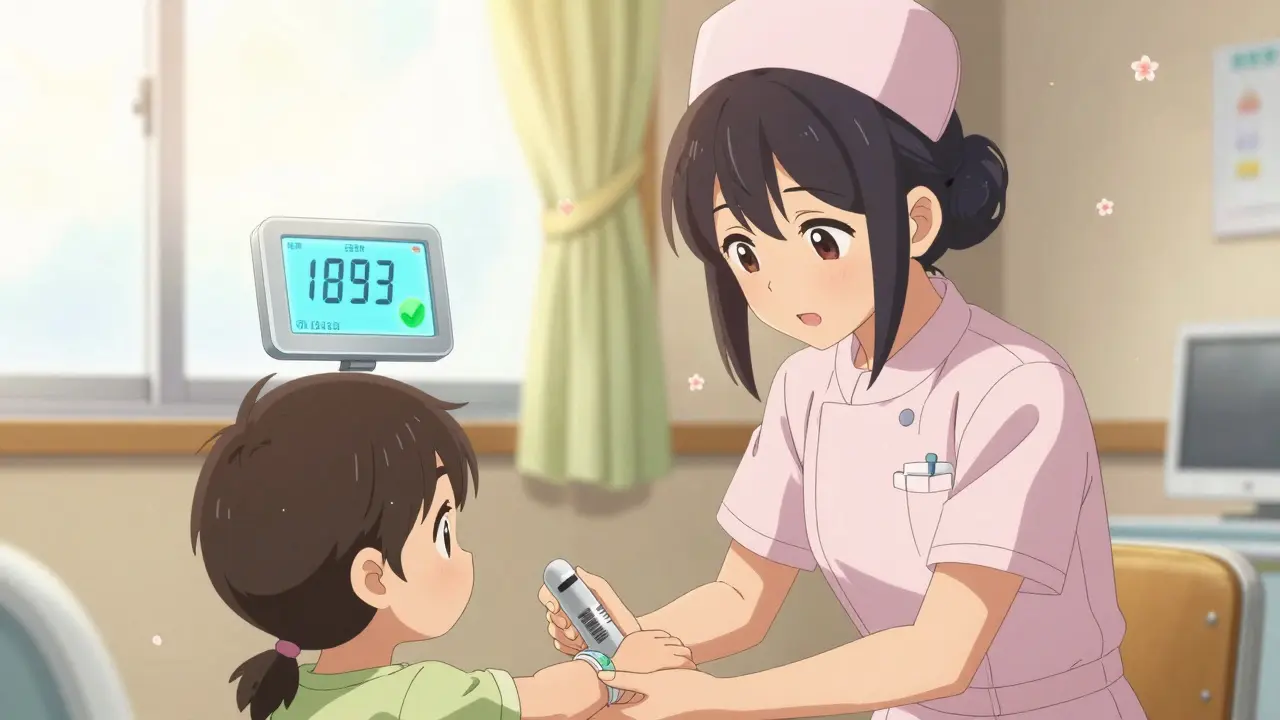
Barcode scanning at the bedside helps too. When a nurse scans the child’s wristband and the medication, the system checks: Is this the right drug? Is the dose correct for this weight? Is the time right? If anything’s off, it stops the process. Studies show this cuts administration errors by 74%.

What You Can’t Rely On
Paper charts, preprinted sheets, and manual calculations are still used in many places-especially smaller clinics and rural hospitals. But they’re risky. A 2014 meta-analysis found that computerized systems reduced prescribing errors by 87%, while paper systems only cut them by 36%. That’s a huge gap.Even worse, some pharmacies still allow weights to be entered in pounds. That’s a recipe for disaster. A 2018 ASHP guideline says: “All pediatric weights must be documented in kilograms only.” Why? Because 12.6% of all weight-related errors come from pounds-to-kilos conversions. One wrong decimal point, and a child gets ten times too much medicine.
And don’t assume the weight on the chart is right. A 2022 survey of 1,247 pediatric nurses found that 63% had seen weight documentation errors in the past year. Nearly half of those errors caused delays in giving medicine-because staff were too scared to guess.
Standardizing the Dose
Another big source of errors? Variable drug concentrations. One hospital might stock vancomycin at 5 mg/mL, another at 10 mg/mL, another at 25 mg/mL. Nurses have to remember which is which. That’s asking for trouble.Facilities that standardize concentrations-using just one strength per drug across the board-see a 72% drop in calculation errors. For example, if every liquid antibiotic for kids is made at 25 mg/mL, then a 10 kg child always gets 4 mL for a 10 mg/kg dose. No math needed. No room for error.
This isn’t just about convenience-it’s about safety. The American Academy of Pediatrics also insists that all pediatric liquid medications must be labeled and dispensed in milliliters only. No teaspoons, no tablespoons, no “a capful.” Those units are too vague. A teaspoon can be 3 mL or 7 mL depending on the spoon. Milliliters? Always the same.
Training and Culture
Technology and protocols mean nothing if staff aren’t trained. A 2022 study found that 38% of pharmacy staff had inadequate training in pediatric pharmacokinetics. That’s not just a gap-it’s a liability.Successful programs require 40 hours of training per clinician, covering weight conversions, dose calculations, how to use the EHR alerts, and what to do when something doesn’t add up. It’s not a one-time class. Quarterly competency checks are required, with a 90% accuracy threshold to keep working independently.
But even the best training won’t fix a culture that punishes mistakes. If a nurse is afraid to speak up because they’ll get in trouble, errors will keep happening. The best safety systems are built on transparency-not blame. When a near-miss is reported, the team asks: “What broke?” not “Who messed up?”

What’s Missing in Many Hospitals
There’s a dangerous gap between big children’s hospitals and small community clinics. In the U.S., 94% of academic children’s hospitals have full weight-based systems. Only 33% of rural hospitals do. That means a child in a small town might get a dose based on a weight written down two months ago-or worse, estimated by a nurse who never saw the child before.And it’s not just about equipment. Rural pharmacies often don’t have access to the hospital’s EHR. They can’t see the latest weight. They’re flying blind. That’s why the American Pharmacists Association found that 28% of community pharmacists report at least one weight-related near-miss every month.
Regulations are starting to catch up. The Leapfrog Group now requires weight verification for hospitals to earn an “A” safety rating. Medicare and Medicaid now require weight documentation on all pediatric prescriptions. But without funding and support for smaller facilities, this safety net won’t reach everyone.
The Future: Smarter, Not Just Harder
New tools are emerging. The FDA is pushing for EHRs to integrate growth charts so they can flag doses that don’t match a child’s expected weight range. AI tools are being tested to predict a child’s weight based on age, height, and past records-catching errors before they’re even entered. Some hospitals are even testing wearable scales for kids with chronic conditions, so weight updates automatically.But the biggest innovation isn’t technological. It’s cultural. As Dr. Robert Wachter from UCSF said: “Technology alone cannot prevent errors. A culture of safety with non-punitive error reporting is essential.”
That means encouraging staff to speak up. Rewarding teams for catching near-misses. Making sure every nurse, pharmacist, and doctor knows: your voice can save a life.
Why is weight so important in pediatric dosing?
Children’s bodies process medications differently than adults, and doses are calculated based on weight-usually in milligrams per kilogram (mg/kg). A small error in weight can lead to a dangerous overdose or an ineffective dose. For example, mistaking 10 kg for 100 kg means giving ten times the intended dose, which can cause organ failure or death.
What’s the most common cause of pediatric dosing errors?
The most common cause is weight conversion errors-especially when pounds are used instead of kilograms. Studies show 12.6% of pediatric dosing mistakes come from this single issue. Other major causes include outdated weight records, incorrect manual calculations, and inconsistent drug concentrations.
Can electronic systems really reduce these errors?
Yes-when they’re designed well. EHRs with integrated clinical decision support that require weight entry before prescribing can reduce dosing errors by up to 87%. Systems that use adaptive limits based on growth charts and historical data reduce false alerts by over 60%, helping staff take real warnings seriously.
Should weights be entered in pounds or kilograms?
Always in kilograms. The American Society of Health-System Pharmacists (ASHP) mandates that all pediatric weights be documented in kilograms only. Using pounds leads to conversion errors, which account for over 12% of dosing mistakes. Digital scales should display only kilograms to eliminate confusion.
What’s the role of the pharmacist in preventing these errors?
Pharmacists are the last line of defense. They must independently verify the weight, recalculate the dose, and confirm the concentration and route of administration-even if the computer already approved it. Studies show pharmacist-led verification reduces administration errors by nearly 16 percentage points. They also standardize drug concentrations and train staff on safe practices.
Why do some hospitals still have high error rates?
Many hospitals lack integrated systems, updated weight records, or proper training. Rural and community hospitals often don’t have access to electronic health records, forcing staff to rely on paper charts or estimates. Alert fatigue from poorly designed systems and resistance to new workflows also contribute. Without a culture that encourages reporting near-misses without blame, errors keep happening.
How often should a child’s weight be checked?
For acute care, weight must be measured and documented within 24 hours of admission or any significant change in condition. For outpatient or chronic care, weight should be updated every 30 days. The Institute for Safe Medication Practices says outdated weight is one of the top reasons verification systems fail.
Are liquid medications labeled correctly in most places?
Not always. The American Academy of Pediatrics insists that all pediatric liquid medications must be labeled and dispensed in milliliters (mL) only. But many still use teaspoons or tablespoons, which vary in volume. This leads to dosing mistakes at home. Standardizing to mL eliminates that risk.
What You Can Do Today
If you work in a hospital, clinic, or pharmacy: start with one change. Make sure every pediatric weight is entered in kilograms. Block orders without current weight. Standardize one concentration for each common drug. Train your team on the three-point check. Track your error rates before and after.If you’re a parent: always ask, “What’s my child’s weight in kilograms?” and “How was this dose calculated?” Don’t be shy. You’re their biggest advocate.
Pediatric medication safety isn’t about perfection. It’s about layers. One check might catch a mistake. Two might catch another. Three might save a life. And every time someone speaks up, we get a little safer.
This is the kind of stuff that keeps me up at night. I work in a pediatric ER and I've seen kids get dinged because someone typed 100 instead of 10. We switched to kg-only last year and the vibe changed. Nurses actually breathe easier now. No more panic-calculating in the hallway. 🙌
The three-point check is non-negotiable. I’ve seen pharmacists catch errors because they redid the math. Computer says 4.2 mL? They grab a calculator. And they don’t apologize for it. That’s the culture we need.
standardizing concentrations is the quiet hero here. no more guessing if it's 5mg/ml or 25mg/ml. if every kid gets the same base strength, you cut out half the brainpower needed to not kill them. why isn't this mandatory everywhere?
Let’s be real-this isn’t about technology. It’s about hierarchy. The doctor writes the order, the pharmacist nods, the nurse administers. No one’s supposed to question the chain. But when you make people speak up, you break the cult of infallibility. And that’s terrifying to systems built on obedience. Safety isn’t a protocol-it’s a rebellion.
I trained a whole rural clinic last month. They were using pounds. Had a 7-year-old on a 10x overdose because the scale said 70 and they thought it was kg. We got them digital scales that auto-convert. No more guesswork. One change. One life saved. You don’t need a fancy EHR. You need someone who cares enough to fix it.
I’ve worked in three hospitals. Only one had the three-point system fully enforced. The others? They had the checklist. But no one got audited. No one got praised. So people just checked the box. It’s the difference between compliance and culture.
In India, we don’t have the tech. But we have teamwork. My pharmacy team, we double-check every weight. We say it out loud. '12.5 kg.' 'Yes.' 'Dose is 25 mg.' 'Confirmed.' No computers. Just eyes, ears, and trust. It works. Maybe we don’t need the fancy stuff.
I heard the FDA is secretly using AI to predict kids' weights from photos 🤫. They’re training it on hospital pics. I mean… what if they’re tracking your kid’s growth without consent? This isn’t safety. It’s surveillance. 😳
All this ‘standardization’ nonsense. We used to do it the old way. Parents knew how much to give. Teaspoons worked fine. Now we’re over-medicalizing parenting. Let people use their judgment. Not every kid needs a barcode scan to live.
The data is unequivocal. Weight-based verification reduces errors by over 90% when implemented with fidelity. The resistance isn’t rooted in clinical reasoning-it’s in institutional inertia. Change requires leadership, not just guidelines. Without accountability, even the best protocols become theater.
They’re lying. This is all a ploy to sell more EHR software. I know a nurse who got fired for refusing to use the new system. They replaced her with a robot. Now kids get dosed by AI. What’s next? Drones delivering meds? 🤖💉