

Medicaid spends billions each year on prescription drugs, but the majority of that spending doesn’t come from brand-name pills. It comes from generics - the same medicine, at a fraction of the price. In 2023, generic drugs made up 84.7% of all Medicaid prescriptions, yet they accounted for just 15.9% of total drug spending. That’s the power of generics. But even with these savings, states are under pressure. Drug prices still spike unexpectedly. Shortages of essential medications are growing. And manufacturers sometimes raise prices on old, off-patent drugs with no new research to justify it. So how are states fighting back? They’re not waiting for federal action. They’re building their own systems - and some are working better than others.
How the Federal System Already Helps - and Where It Falls Short
The foundation of Medicaid drug pricing is the Medicaid Drug Rebate Program (MDRP), created in 1990. Under this program, drug makers must pay rebates to states in exchange for having their drugs covered by Medicaid. For brand-name drugs, rebates are based on a complex formula tied to price increases and the best price offered to other buyers. But for generics? The rebate is simpler: 13% of the Average Manufacturer Price (AMP), or the difference between AMP and the best price, whichever is higher. That’s it.
This sounds fair, but here’s the catch: states can’t negotiate extra rebates for generics like they can for brand-name drugs. That means when a generic drug suddenly jumps in price - say, from $5 to $50 a pill - the federal rebate doesn’t change. The state still gets 13% of that new, inflated price. That’s not a discount. It’s a tax on the patient and the state budget.
Some states have tried to fix this by asking manufacturers to pay more - but federal rules block them. So instead, they’ve turned to other tools. And they’re getting creative.
Maximum Allowable Cost Lists: The Most Common Tool
Forty-two states now use Maximum Allowable Cost (MAC) lists to cap what they’ll pay for a generic drug. Think of it like a price ceiling. If a pharmacy tries to bill Medicaid for a generic pill at $12, but the MAC list says the maximum allowed is $8, the state only pays $8. The pharmacy eats the difference - or finds a cheaper supplier.
MAC lists aren’t magic. They’re updated manually, often monthly or quarterly. That creates problems. When a drug’s price drops suddenly - say, because a new manufacturer enters the market - the MAC list might not reflect it for weeks. Pharmacies get stuck. Patients wait. And sometimes, the pharmacy can’t even get the drug at the MAC price, so they don’t fill the prescription at all.
A 2024 survey found that 68% of states update their MAC lists less than once a month. Meanwhile, 74% of independent pharmacies reported delayed payments or denied claims because the MAC price didn’t match what they actually paid. That’s not cost control. That’s administrative chaos.
Mandatory Generic Substitution: Making the Easy Choice
Forty-nine states require pharmacists to substitute a generic drug when it’s available - unless the doctor says no. This isn’t new. But it’s powerful. It removes the burden from the patient. You don’t have to ask. You don’t have to argue. The pharmacy just gives you the generic. And because generics are cheaper, the state saves money without changing a single rule.
Some states go further. They create preferred drug lists - a curated list of generics that are proven to work just as well as more expensive options. If a doctor prescribes a non-preferred drug, the pharmacy has to get prior approval. That slows down the process, but it also cuts unnecessary spending. Twenty-eight states use this method, and many tie it to therapeutic interchange - meaning pharmacists can swap one generic for another if they’re clinically equivalent.
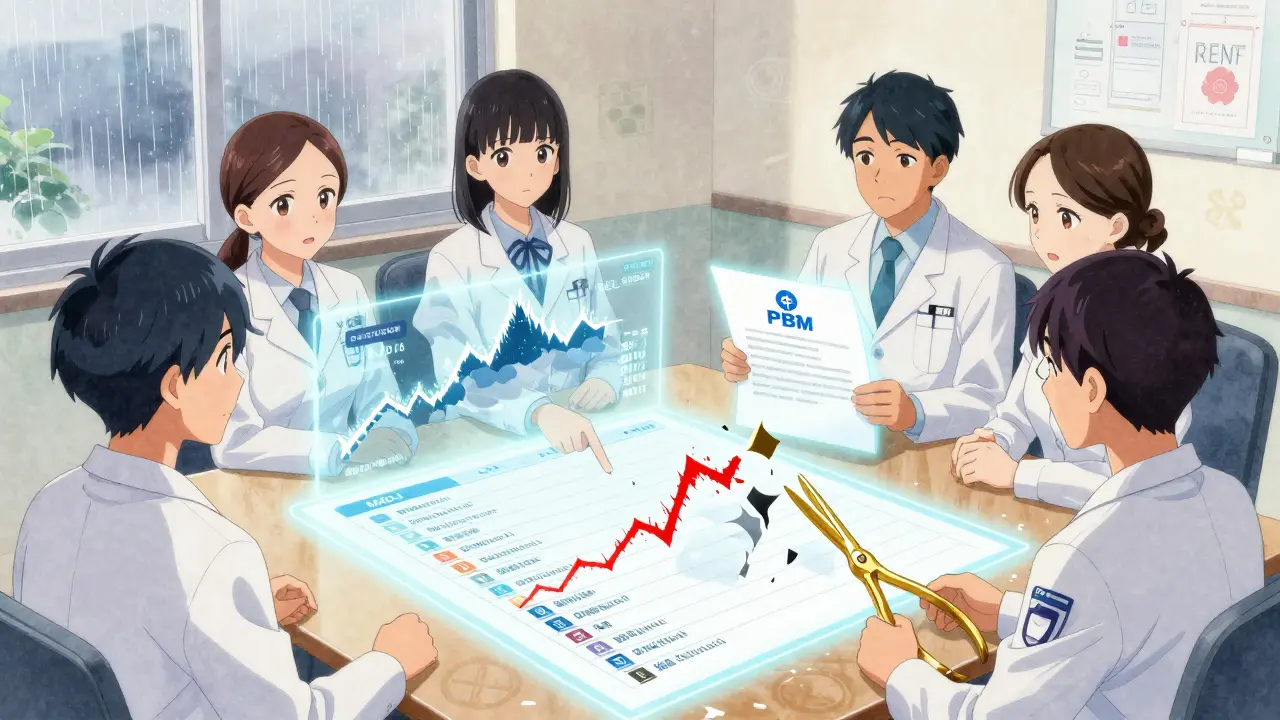
Cracking Down on Price Gouging
Here’s the most controversial move: some states are making it illegal to jack up prices on old generic drugs with no new clinical value. Maryland passed a law in 2020 that lets the state investigate and penalize manufacturers who raise prices on generics without justification. Other states, like California and Colorado, followed with similar laws.
It sounds simple: don’t exploit a monopoly on a 30-year-old pill. But drug makers fight back. They argue these laws interfere with free markets. Yet when a drug like doxycycline - used for infections for over 60 years - jumps from $20 to $1,800 a bottle, it’s hard to call that a market. It’s price gouging.
States that have passed these laws have seen fewer wild price spikes. But enforcement is tricky. It takes time, staff, and legal resources. Only a handful of states have the capacity to investigate claims thoroughly.
Controlling the Middlemen: Pharmacy Benefit Managers
Most states don’t pay pharmacies directly. They hire Pharmacy Benefit Managers (PBMs) like OptumRx or Magellan to handle claims, negotiate prices, and manage networks. But PBMs don’t always pass savings on. They keep a cut. Sometimes, they even profit from price increases.
That’s why 27 states introduced new PBM transparency rules in 2024. Nineteen of them now require PBMs to report exactly how much they paid for each generic drug - not just what they billed Medicaid. This is a game-changer. If a PBM buys a pill for $1.50 and bills Medicaid $10, the state can demand a refund. Or drop the PBM. And some have.
States like New York and Oregon are now using this data to renegotiate contracts. They’re also exploring direct payment models - cutting PBMs out entirely for high-volume generics. It’s risky. But the savings could be huge.
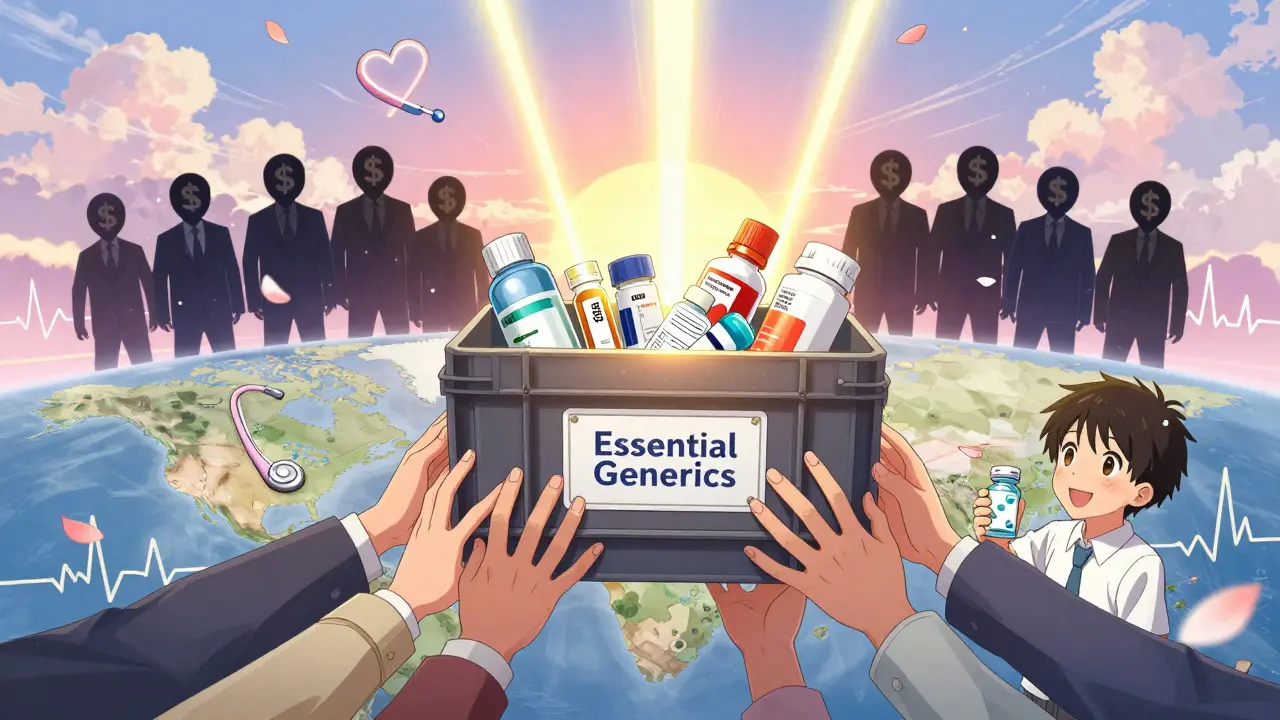
Stockpiling Generics: Preparing for the Next Shortage
In 2023, 23 states reported shortages of critical generic drugs. Some lasted over 140 days. Drugs like injectable epinephrine, insulin, and antibiotics disappeared. Hospitals scrambled. Patients went without.
Twelve states introduced new laws in 2024 to build emergency stockpiles of essential generics. Oregon and Washington launched a multi-state purchasing pool to buy 47 high-volume generics together - giving them more bargaining power. Texas is stockpiling antibiotics. Maryland is securing alternative suppliers for heart medications.
This isn’t just about saving money. It’s about saving lives. And it’s becoming a top priority. By 2026, the National Academy for State Health Policy predicts 22 states will have formal stockpiling programs for generics.
What Doesn’t Work - And Why
Not every strategy pays off. Some states tried to cap reimbursement at a fixed dollar amount - like $2 per pill - regardless of market price. That led to pharmacies refusing to fill prescriptions. Others tried to ban certain generics outright. That created access problems for patients with allergies or sensitivities.
The biggest mistake? Ignoring supply chains. You can’t control price if you don’t control who makes the drug. Three companies now control 65% of the generic injectable market. If one factory shuts down - due to FDA violations, natural disaster, or financial trouble - dozens of drugs vanish overnight. States that focus only on price, and not on manufacturing diversity, are setting themselves up for failure.
The Future: More States, More Pressure
The number of states with at least one drug affordability policy jumped from 12 in 2020 to 34 in 2024. The Congressional Budget Office predicts 15 more will pass generic pricing laws in 2025. But legal challenges are growing. Drug makers are suing states over price caps, arguing they violate federal law.
Still, the trend is clear. States are tired of waiting. They’re using every tool they have: MAC lists, PBM transparency, stockpiling, anti-gouging laws, and therapeutic interchange. They’re not perfect. But they’re real. And they’re working.
The goal isn’t to eliminate all drug spending. It’s to stop paying for fraud, greed, and inefficiency. Generics are the most powerful weapon in that fight. And states are finally learning how to use it.
Do all states have the same Medicaid generic drug policies?
No. Each state runs its own Medicaid program, so policies vary widely. Some states use strict Maximum Allowable Cost (MAC) lists, while others rely on preferred drug lists or therapeutic interchange. A few, like Maryland and California, have passed laws to stop price gouging on generics. Others focus on PBM transparency or stockpiling. There’s no national standard - which means savings and access can differ dramatically depending on where you live.
Why do generic drug prices suddenly go up?
Generic prices spike for a few reasons: fewer manufacturers making the drug, supply chain disruptions, or consolidation in the industry. When only one or two companies produce a drug, they can raise prices without competition. Sometimes, a manufacturer stops making a drug because it’s not profitable, then restarts production later - but at a much higher price. This happened with drugs like doxycycline and cyclophosphamide. There’s often no new research or improvement - just a business decision to maximize profit.
How do Maximum Allowable Cost (MAC) lists affect patients?
MAC lists are meant to save money, but they can hurt access. If the MAC price is set too low, pharmacies may not be able to buy the drug at that rate - so they won’t fill the prescription. Patients may have to wait weeks for the state to update the list, or switch to a different generic. In some cases, patients go without needed medication. The system works best when MAC prices are updated frequently and reflect actual market prices - but too many states update them too slowly.
Can states really stop drug companies from raising generic prices?
Yes - but only in some cases. States like Maryland can investigate and fine manufacturers for unjustified price hikes on off-patent drugs. Other states can set payment caps through MAC lists or require PBM transparency. But they can’t force manufacturers to sell at a loss. If a company decides a drug isn’t profitable, it can stop making it - which can cause shortages. So states have to balance cost control with keeping drugs available. It’s a tight line.
What’s the biggest threat to Medicaid’s generic drug savings?
The biggest threat is supply chain fragility. Three companies control 65% of the generic injectable market. If one faces an FDA shutdown, a natural disaster, or financial collapse, dozens of critical drugs disappear. States that focus only on price - and not on diversifying suppliers or stockpiling essentials - are at high risk. Shortages force patients onto more expensive brand-name drugs, which can undo years of savings. Building resilience matters more than cutting pennies per pill.
I just got my mom's prescription filled and the pharmacy said Medicaid wouldn't cover it because the MAC price was too low. She needs this for her heart. It's crazy how a system meant to help ends up hurting people who can't afford to fight it.
Generics are the last bastion of sanity in a healthcare system that's lost its soul. We treat medicine like a commodity when it's the only thing standing between life and oblivion. And yet we let corporations play Monopoly with our survival
I'm curious how often MAC lists are updated in states that don't have real-time pricing data. Is there any public record of this? I'd love to see the lag time between market shifts and policy updates.
The PBM structural arbitrage is a textbook case of rent-seeking behavior. The agency-cost problem is exacerbated by asymmetric information flows between state actuaries and third-party administrators. We need blockchain-enabled transparent ledger systems to eliminate moral hazard. 😏
I get why states are trying to fix this. But let's not forget the pharmacists on the front lines. They're caught between broken systems and desperate patients. Maybe we should be helping them with better tools instead of just changing the rules. Everyone deserves to feel supported, not blamed.
Why do we even let states mess with this? Federal control would make everything simpler. Why should someone in Texas pay more for insulin than someone in Oregon? This isn't freedom, it's chaos dressed up as innovation.
The systemic fragility of generic supply chains... it's not just a policy failure-it's an epistemological crisis. We've outsourced the production of life-sustaining compounds to oligopolistic entities whose incentives are misaligned with human survival. The state's role must be reconstituted-not regulated, but reimagined.
MAC lists are a joke. Everyone knows they're outdated. Why do states even bother? It's just performative policy. They want to look like they're doing something while doing nothing useful.
Hey I work at a pharmacy in Ohio and this is real. We had to turn away 3 people last week because the MAC was $1.20 and we paid $2.10. We lost money every time. I just want to help people. Why does it have to be so hard?
You know what’s awesome? States are stepping up when the feds won’t. That’s leadership. MAC lists, PBM transparency, stockpiling - these aren’t perfect, but they’re proof that change is possible. Keep pushing. Every saved dollar is a saved life.
I live in Quebec and we have a public drug plan. Generics are $5. No MAC lists. No PBMs. No drama. Just affordable meds. Maybe we don’t need all these complicated systems. Sometimes the simplest solution is the best one.
I mean, if you're gonna have a generic drug system, you gotta have a system. You can't just wing it. You need data. You need oversight. You need accountability. Otherwise it's just chaos. And chaos kills people. No joke.
Stockpiling is GENIUS 💪🔥 Imagine if we treated meds like we treat toilet paper during a pandemic? We’d never run out again. States are finally thinking like engineers, not bureaucrats. Let’s scale this nationally! 🌎💉
You people act like this is some heroic effort. Most of these laws are just political theater. The same companies that raise prices are the ones lobbying the states. It’s all rigged. And you’re cheering for the wrong side.